Howland Mill Village Historic District

Why it's listed
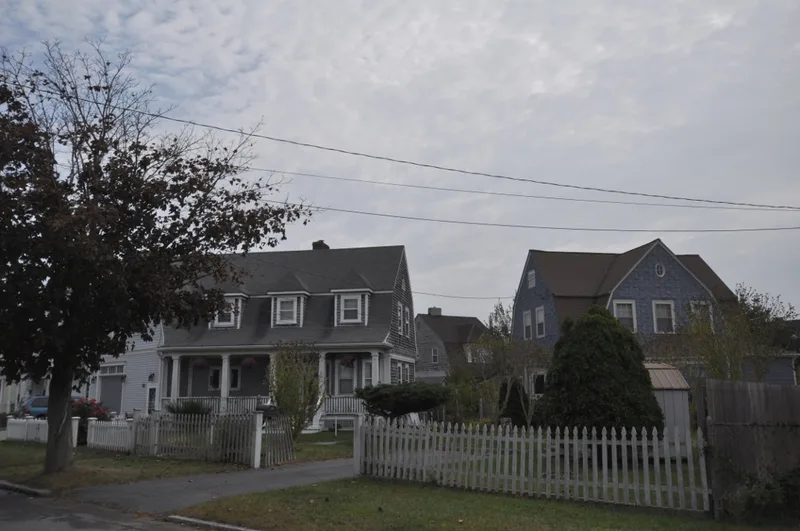
Howland Mill Village is a compact neighborhood of about 9.9 acres in the southern part of New Bedford, Massachusetts. The Howland Mill Corporation built most of it in 1888-1890 as housing for its workers, with several double-deckers added on open parcels between about 1915 and 1925. The district holds 98 resources, 72 of them contributing, mostly small wood-frame cottages in four basic types: gable-end, jerkin-front, and two gambrel-roofed variations. Their designs draw on Queen Anne and Colonial Revival styles, including patterned shingles, clipped gables and classical porch columns. The cottages sit at varied angles along curving streets, surrounded by small fenced yards, vegetable gardens and grape arbors. Planned as a pleasant village rather than a block of tenements, the layout contrasts with typical mill housing in the city. Over time the residents shifted from English, Irish and French-Canadian families to largely Portuguese ones, and the area remains part of the city's Portuguese community.
Machine-generated summary. This summary was generated by a language model from the official nomination document and has not been reviewed line by line by an editor. It may contain errors. Check the source document before relying on any detail. Source: nomination document (PDF) · catalog entry. Generated October 2026 (model claude-sonnet-5-5, prompt v1.0-2026-10-29).
| Styles | Late Victorian: Queen Anne; Late 19th and 20th Century Revivals: Colonial Revival |
|---|---|
| Areas of significance | Architecture, Social History, Community Planning and Development |
| Acreage | 9.9 |
| Boundary source | NPS cultural-resource GIS polygon |
| Full listing page | Howland Mill Village Historic District (property record) |
What listing means for this property
This is a historic district. Buildings within its boundary are either contributing (they add to the district's significance) or non-contributing. Owners of contributing income-producing buildings can claim the 20% federal rehabilitation tax credit; homeowners should look at state credits. National Register districts impose no design review by themselves; a local historic district ordinance, if one exists, does (the difference explained).
General information, not legal or tax advice. Rules change; confirm with your State Historic Preservation Office or a qualified adviser.