Howe Village Historic District

Why it's listed
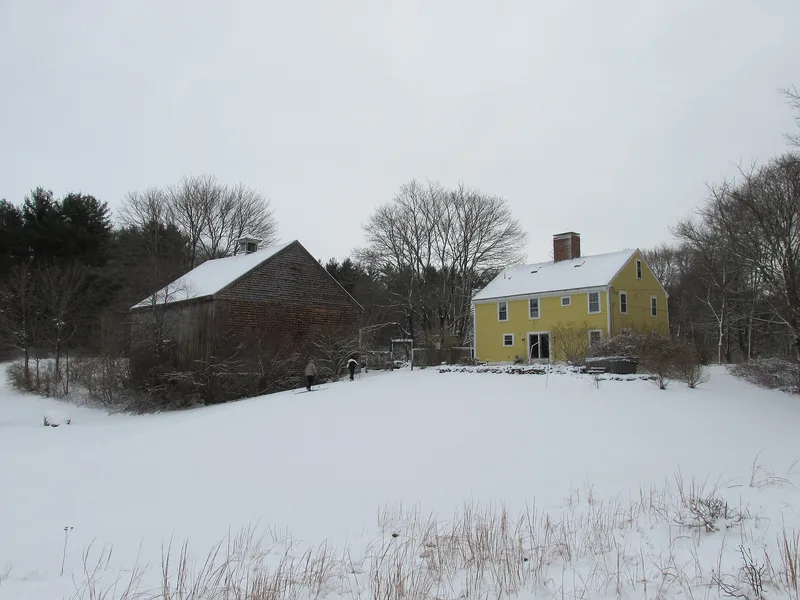
Howe Village is a roughly 65-acre cluster of homes in Boxford, Massachusetts, set along both sides of Salem Road (Route 97). Of its fourteen structures, eight historic houses stand on the east side of the road, shielded by six 20th-century homes opposite. The earliest is the Thomas Perley House, dated either 1684 or 1760, with others from 1749, 1818 and the 1840s-1850s. Styles run from a saltbox with a center chimney to a Federal farmhouse and Greek Revival dwellings. Salem Road was the first road laid out in Boxford, in 1652, and Thomas Perley ran a tavern here. In 1701 a committee met Native claimants at that tavern and obtained a quitclaim deed to disputed land. The Perley family held town and provincial offices, and the Howe family, for whom the village is named, led its 19th-century shoe manufacturing. The district was also voted a local historic district in 1971, and its houses remain occupied.
Machine-generated summary. This summary was generated by a language model from the official nomination document and has not been reviewed line by line by an editor. It may contain errors. Check the source document before relying on any detail. Source: nomination document (PDF) · catalog entry. Generated October 2026 (model claude-sonnet-5-5, prompt v1.0-2026-10-29).
| Styles | Rural Colonial, Federal and Greek Revival dwellings of the 17th to 19th centuries |
|---|---|
| Areas of significance | Industry, Politics/Government, Architecture |
| Acreage | 65 |
| Boundary source | NPS cultural-resource GIS polygon |
| Full listing page | Howe Village Historic District (property record) |
What listing means for this property
This is a historic district. Buildings within its boundary are either contributing (they add to the district's significance) or non-contributing. Owners of contributing income-producing buildings can claim the 20% federal rehabilitation tax credit; homeowners should look at state credits. National Register districts impose no design review by themselves; a local historic district ordinance, if one exists, does (the difference explained).
General information, not legal or tax advice. Rules change; confirm with your State Historic Preservation Office or a qualified adviser.