Hinckley's Corner Historic District

Why it's listed
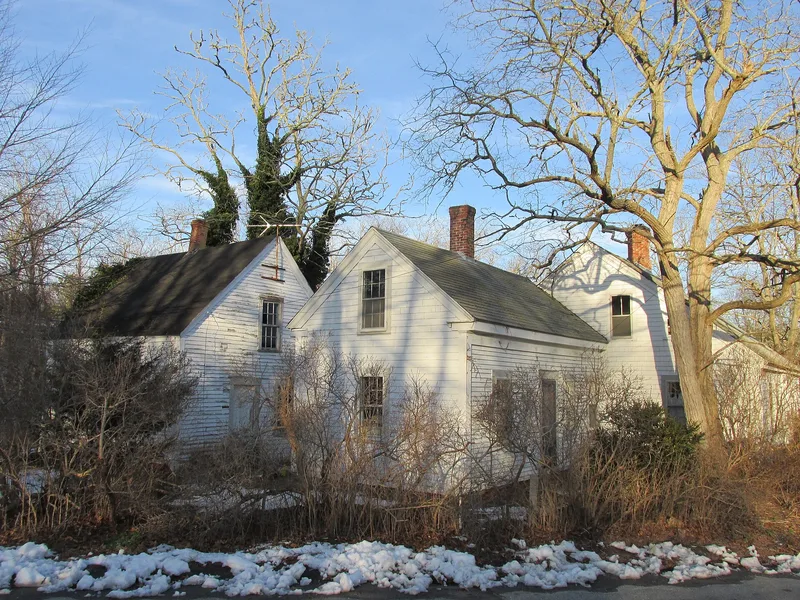
Hinckley's Corner Historic District is a group of three Cape Cod-style houses and their outbuildings in South Wellfleet, Massachusetts, near Paine Hollow Road and the Old Kings Highway. The Jonathan Young Homestead, built about 1790, is a full Cape; the John Lewis House and Robert Paine House, both about 1820, are three-quarter Capes. Each is a 1 1/2-story dwelling with a gable roof and little ornament, sheathed in clapboards on the front and shingles elsewhere. Doorway details differ, showing pilasters and dentils, a fanlight, or a transom with tapered pilasters. Outbuildings include a former store and gas station, an oyster house built in 1927-28, a fire engine garage and a boatbuilding shop, reflecting the area's fishing, shellfishing and small-business life. The district was recognized for its architecture, as a locally significant example of how modest Cape Cod houses varied in form, with a period of significance from about 1790 to 1948 and only minimal, functional alterations.
Machine-generated summary. This summary was generated by a language model from the official nomination document and has not been reviewed line by line by an editor. It may contain errors. Check the source document before relying on any detail. Source: nomination document (PDF) · catalog entry. Generated October 2026 (model claude-sonnet-5-5, prompt v1.0-2026-10-29).
| Period of significance | c.1790 - 1948 |
|---|---|
| Styles | Early 19th century; Other: Cape Cod (with Georgian-Federal influences) |
| Areas of significance | Architecture, Community Planning and Development |
| Acreage | 7.6 |
| Boundary source | NPS cultural-resource GIS polygon |
| Full listing page | Hinckley's Corner Historic District (property record) |
What listing means for this property
This is a historic district. Buildings within its boundary are either contributing (they add to the district's significance) or non-contributing. Owners of contributing income-producing buildings can claim the 20% federal rehabilitation tax credit; homeowners should look at state credits. National Register districts impose no design review by themselves; a local historic district ordinance, if one exists, does (the difference explained).
General information, not legal or tax advice. Rules change; confirm with your State Historic Preservation Office or a qualified adviser.