Harvard Avenue Historic District

Why it's listed
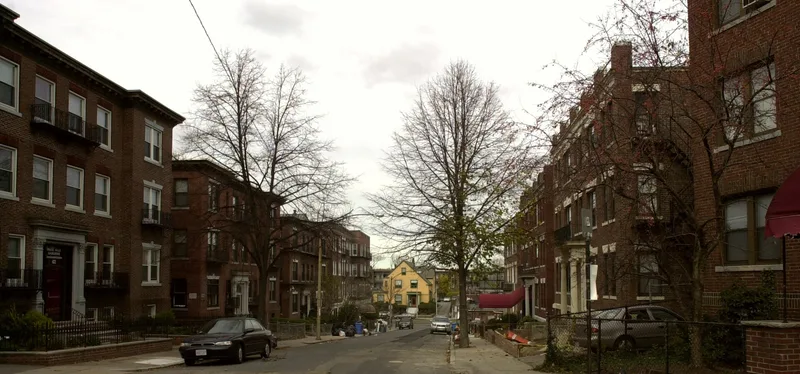
Harvard Avenue Historic District covers about 23 acres in Boston's Allston neighborhood, running south from the former Boston & Albany railroad tracks toward Commonwealth Avenue. Most of its buildings went up between 1905 and 1916 as one-story brick store blocks, small apartment buildings and row houses. A few older structures survive, including the c. 1870 John English House, the 1887 Richardsonian Romanesque Allston Station by Shepley, Rutan & Coolidge, and the 1891 Harvard Avenue Fire Station. Near the depot, multi-story brick blocks such as the Chester Block, Allston Hall Block and the 1895 Allen Building combined stores, apartments and meeting halls. Architects represented include Frank Shepherd, Franz Joseph Untersee, Henry Kendall and John Spofford. Many storefronts and windows have been altered, but the district keeps its overall character, with only 15 noncontributing resources. It documents how a Victorian railroad suburb was rebuilt as a masonry commercial and apartment district in the early twentieth century.
Machine-generated summary. This summary was generated by a language model from the official nomination document and has not been reviewed line by line by an editor. It may contain errors. Check the source document before relying on any detail. Source: nomination document (PDF) · catalog entry. Generated October 2026 (model claude-sonnet-5-5, prompt v1.0-2026-10-29).
| Styles | Late Victorian (Mansard, Second Gothic Revival, Queen Anne, Richardsonian Romanesque, Renaissance Revival); Late 19th and 20th Century Revivals (Colonial Revival, Classical Revival, Tudor Revival, Spanish Colonial Revival) |
|---|---|
| Areas of significance | Architecture, Commerce, Community Planning and Development, Social History |
| Acreage | 23 |
| Boundary source | NPS cultural-resource GIS polygon |
| Full listing page | Harvard Avenue Historic District (property record) |
What listing means for this property
This is a historic district. Buildings within its boundary are either contributing (they add to the district's significance) or non-contributing. Owners of contributing income-producing buildings can claim the 20% federal rehabilitation tax credit; homeowners should look at state credits. National Register districts impose no design review by themselves; a local historic district ordinance, if one exists, does (the difference explained).
General information, not legal or tax advice. Rules change; confirm with your State Historic Preservation Office or a qualified adviser.