Glen Road Historic District

Why it's listed
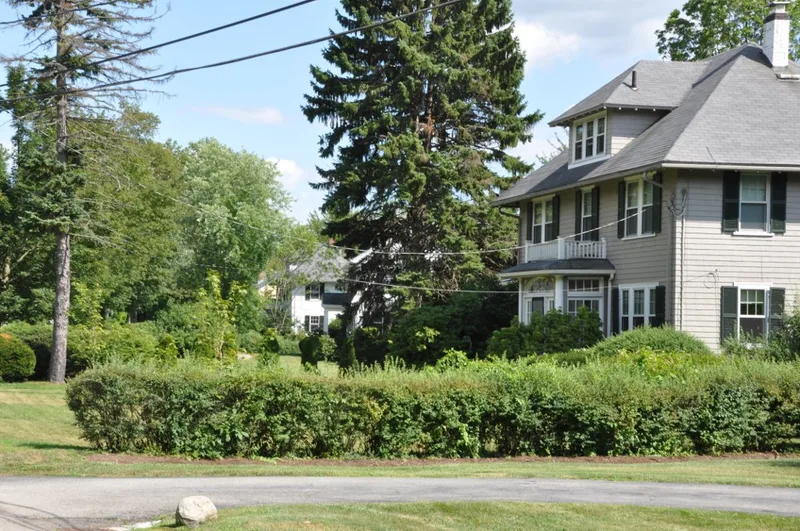
Glen Road in southeast Weston, Massachusetts, is a winding country road lined with a neighborhood of modest, closely related houses. The 27-acre district holds 40 buildings, including 28 contributing residences and five garages. Most are early 20th-century middle-class homes, about half from the 1920s, built in a few repeated plans such as the Four Square, side-gable and Dutch Colonial, with Colonial Revival and Craftsman details. Older buildings include the 1732 Nathaniel Jennison House, moved across the street in 1924, and the Federal-style Pratt/Wyman House of about 1812. A remodeled former Mansard hotel and four small cottages recall a summer hotel complex. The Jennings family, local farmers, subdivided their land and built roughly 18 of the houses, many sold to businessmen and managers who valued the rural setting and the nearby train station. The district reflects Weston's change from farming town to suburb and a consistent collection of early 20th-century domestic architecture.
Machine-generated summary. This summary was generated by a language model from the official nomination document and has not been reviewed line by line by an editor. It may contain errors. Check the source document before relying on any detail. Source: nomination document (PDF) · catalog entry. Generated October 2026 (model claude-sonnet-5-5, prompt v1.0-2026-10-29).
| Period of significance | 1732-1956 |
|---|---|
| Styles | Federal; Second Empire (Mansard); Colonial Revival; Tudor Revival; Craftsman |
| Areas of significance | Architecture, Community Planning and Development |
| Acreage | 27 |
| Boundary source | NPS cultural-resource GIS polygon |
| Full listing page | Glen Road Historic District (property record) |
What listing means for this property
This is a historic district. Buildings within its boundary are either contributing (they add to the district's significance) or non-contributing. Owners of contributing income-producing buildings can claim the 20% federal rehabilitation tax credit; homeowners should look at state credits. National Register districts impose no design review by themselves; a local historic district ordinance, if one exists, does (the difference explained).
General information, not legal or tax advice. Rules change; confirm with your State Historic Preservation Office or a qualified adviser.