Fruitlands Museums Historic District

Why it's listed
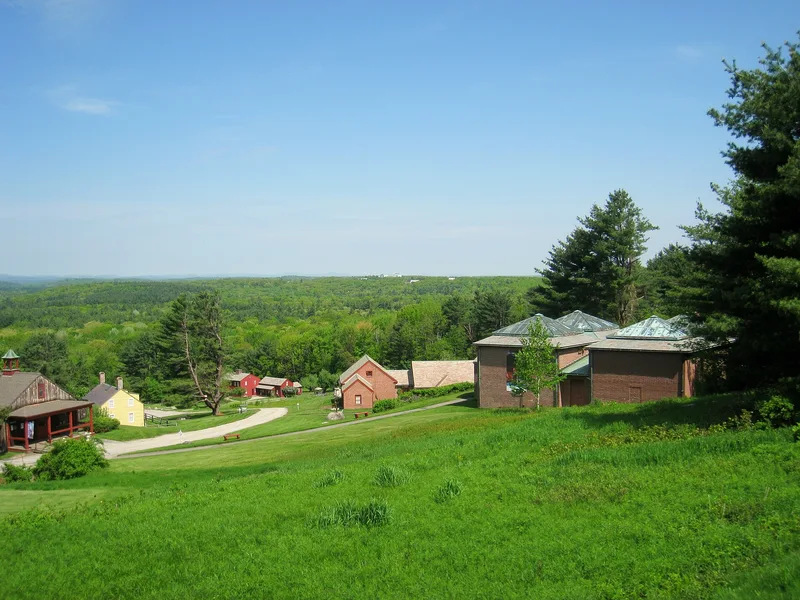
Fruitlands Museums occupy a ridge on Prospect Hill Road in Harvard, Massachusetts, overlooking the Nashua River valley. The 130-acre property was assembled by Clara Endicott Sears, who bought land in 1910 for a country home, the Pergolas. After learning that a nearby farmhouse had been Bronson Alcott's Fruitlands, she restored it and opened it as a museum in 1914. Further museums followed: a Shaker museum in 1916, an American Indian museum in 1929, and a picture gallery in 1941, expanded in 1947. Supporting buildings include a garden house, farm, director's residence and Prospect House. The district was recognized for Sears's role as an early New England preservationist who collected buildings and artifacts and opened them to the public, for the museums' design and collections, and for the open land that helps preserve Harvard's scenic and agricultural landscape. The Alcott house itself was earlier designated a National Historic Landmark in 1974.
Machine-generated summary. This summary was generated by a language model from the official nomination document and has not been reviewed line by line by an editor. It may contain errors. Check the source document before relying on any detail. Source: nomination document (PDF) · catalog entry. Generated October 2026 (model claude-sonnet-5-5, prompt v1.0-2026-10-29).
| Period of significance | 1910-1947 |
|---|---|
| Styles | Craftsman; Shingle |
| Areas of significance | Architecture, Art, Social History, Community Planning and Development, Education, Landscape Architecture |
| Acreage | 130 |
| Boundary source | NPS cultural-resource GIS polygon |
| Full listing page | Fruitlands Museums Historic District (property record) |
What listing means for this property
This is a historic district. Buildings within its boundary are either contributing (they add to the district's significance) or non-contributing. Owners of contributing income-producing buildings can claim the 20% federal rehabilitation tax credit; homeowners should look at state credits. National Register districts impose no design review by themselves; a local historic district ordinance, if one exists, does (the difference explained).
General information, not legal or tax advice. Rules change; confirm with your State Historic Preservation Office or a qualified adviser.