Five Corners Historic District

Why it's listed
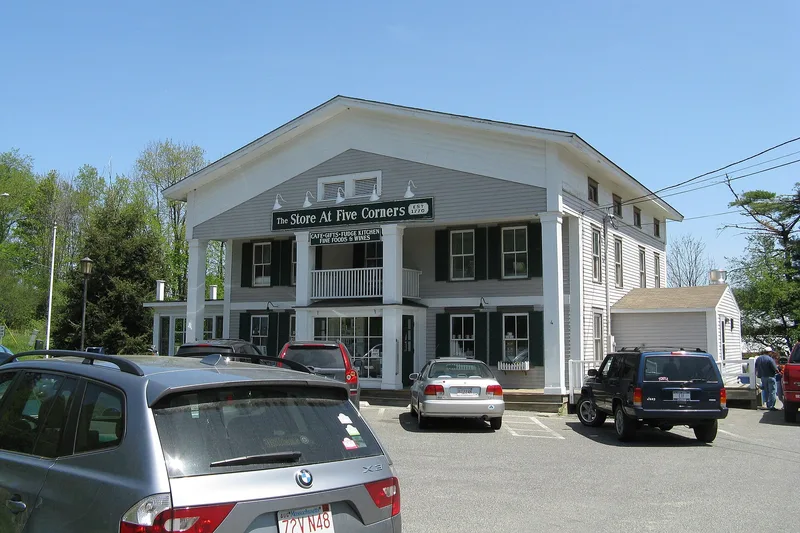
Five Corners Historic District, also known as South Center, is a 58-acre crossroads community in southern Williamstown, Massachusetts. Five roads meet at its center, and farmland, river valleys and foothills surround it. The district has 30 contributing buildings, structures, objects and sites. They include the Samuel Clark House of about 1765, the Federal-style Ambrose Hall and Ebenezer Foster houses, and the brick Dr. Alanson Porter House of 1813, the only masonry building. Sloan Tavern, begun about 1770 and enlarged with Greek Revival details after 1833, is now a store. The Second Congregational Church of 1874-1875 combines Gothic Revival and Eastlake trim. The 1768-era Southlawn Cemetery, a 1939 dairy barn and silos, and the South Center School round out the group. The settlement grew around a tavern, store, school and burying ground, and later added a meetinghouse, a woolen mill and a cheese factory. It remained agricultural after railroads bypassed it.
Machine-generated summary. This summary was generated by a language model from the official nomination document and has not been reviewed line by line by an editor. It may contain errors. Check the source document before relying on any detail. Source: nomination document (PDF) · catalog entry. Generated October 2026 (model claude-sonnet-5-5, prompt v1.0-2026-10-29).
| Styles | Georgian, Federal, Greek Revival, Gothic, Italianate, Eastlake, Colonial Revival, National Folk Style |
|---|---|
| Areas of significance | Architecture, Social History |
| Acreage | 58 |
| Boundary source | NPS cultural-resource GIS polygon |
| Full listing page | Five Corners Historic District (property record) |
What listing means for this property
This is a historic district. Buildings within its boundary are either contributing (they add to the district's significance) or non-contributing. Owners of contributing income-producing buildings can claim the 20% federal rehabilitation tax credit; homeowners should look at state credits. National Register districts impose no design review by themselves; a local historic district ordinance, if one exists, does (the difference explained).
General information, not legal or tax advice. Rules change; confirm with your State Historic Preservation Office or a qualified adviser.