Fish Flake Hill Historic District

Why it's listed
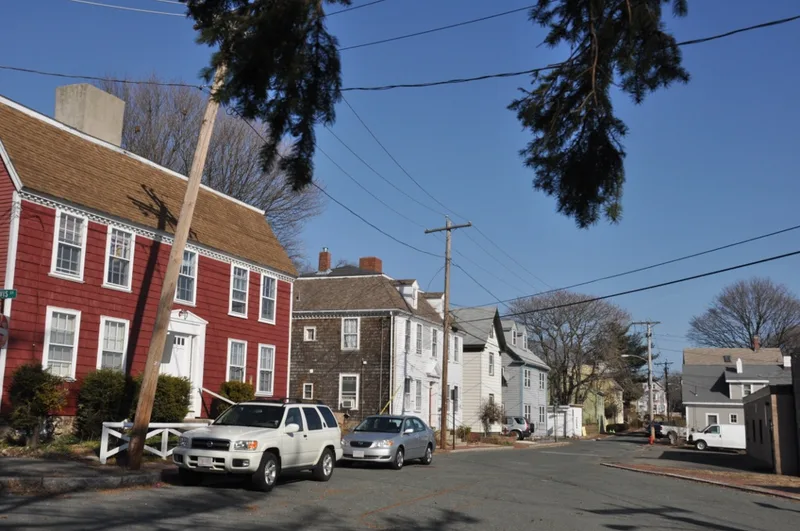
Fish Flake Hill rises steeply from Beverly Harbor, and Front Street runs along its slope between Bartlett and Cabot Streets. Twenty-four wooden buildings stand close together within ten feet of the street, ranging from one and a half to three stories. Twelve date to the 18th century and show Colonial and Federal character, while one is dated to 1641 though altered, and the rest are mid to late 19th-century vernacular. The hill takes its name from the fish-drying flakes once found here. Development accelerated after 1764, when sea captains bought wharves and built homes overlooking the harbor. Blacksmiths, coopers, chandleries, and ship outfitters made it Beverly's business center. During the Revolution, the Hannah was outfitted at General John Glover's wharf and sailed in September 1775 as the first ship of Washington's New England Fleet, and privateers brought some six hundred captured ships to Beverly's wharves. Many buildings are altered and the area was in deteriorated condition at listing.
Machine-generated summary. This summary was generated by a language model from the official nomination document and has not been reviewed line by line by an editor. It may contain errors. Check the source document before relying on any detail. Source: nomination document (PDF) · catalog entry. Generated October 2026 (model claude-sonnet-5-5, prompt v1.0-2026-10-29).
| Period of significance | 18th Century |
|---|---|
| Styles | Colonial and Federal, with later American vernacular buildings |
| Areas of significance | Commerce, Military, Architecture, Maritime History |
| Acreage | 0.5 |
| Boundary source | NPS cultural-resource GIS polygon |
| Full listing page | Fish Flake Hill Historic District (property record) |
What listing means for this property
This is a historic district. Buildings within its boundary are either contributing (they add to the district's significance) or non-contributing. Owners of contributing income-producing buildings can claim the 20% federal rehabilitation tax credit; homeowners should look at state credits. National Register districts impose no design review by themselves; a local historic district ordinance, if one exists, does (the difference explained).
General information, not legal or tax advice. Rules change; confirm with your State Historic Preservation Office or a qualified adviser.