Farnams Village Historic District

Why it's listed
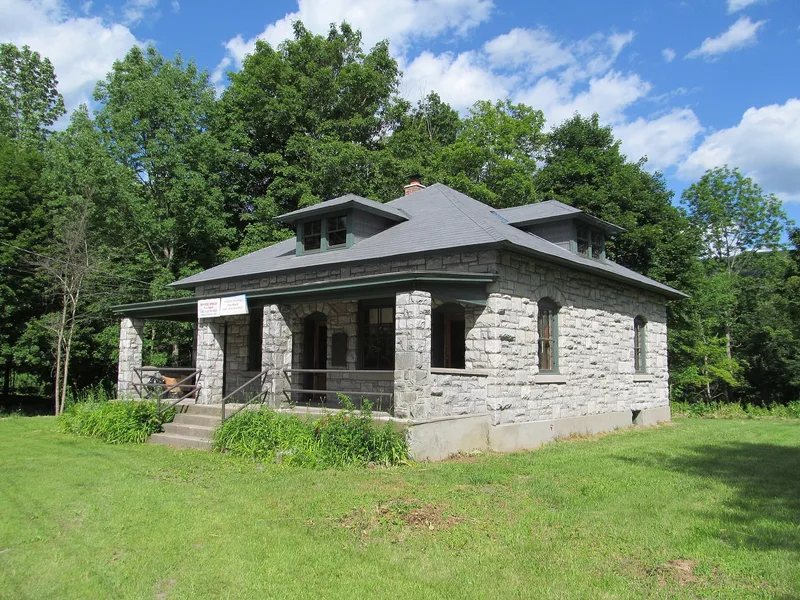
Farnams Village is a limestone mining community in southwestern Cheshire, set in the foothills of Mount Greylock beside Cheshire Reservoir. The district covers about 1,400 acres and includes two quarries, remnants of quarrying equipment, a stone dynamite shed, frame houses, a limestone paymaster's office built in 1921, a dairy barn and the remains of rail lines. Quarrying began in the nineteenth century under the Farnam family. After 1906 the Farnam-Cheshire Lime Company, run by C. J. Curtin, expanded the operation and built nine houses for workers between about 1910 and 1925. Most were two- and four-family buildings in a plain Queen Anne manner, with two Craftsman bungalows. Italian immigrants, many from the Alps, the Veneto and Sicily, came to work in the quarry and mill, and they brought their traditions to the village. The district was listed for this combined industrial, social and architectural record, along with its landscape. Conditions range from good to poor, though the village retains much of its historic character.
Machine-generated summary. This summary was generated by a language model from the official nomination document and has not been reviewed line by line by an editor. It may contain errors. Check the source document before relying on any detail. Source: nomination document (PDF) · catalog entry. Generated October 2026 (model claude-sonnet-5-5, prompt v1.0-2026-10-29).
| Styles | Greek Revival, Late Victorian Gothic and Italianate, Colonial Revival, Bungalow/Craftsman |
|---|---|
| Areas of significance | Architecture, Industry, Social History, Agriculture |
| Acreage | 1400 |
| Boundary source | NPS cultural-resource GIS polygon |
| Full listing page | Farnams Village Historic District (property record) |
What listing means for this property
This is a historic district. Buildings within its boundary are either contributing (they add to the district's significance) or non-contributing. Owners of contributing income-producing buildings can claim the 20% federal rehabilitation tax credit; homeowners should look at state credits. National Register districts impose no design review by themselves; a local historic district ordinance, if one exists, does (the difference explained).
General information, not legal or tax advice. Rules change; confirm with your State Historic Preservation Office or a qualified adviser.