Farlow and Kendrick Parks Historic District (Boundary Increase)

Why it's listed
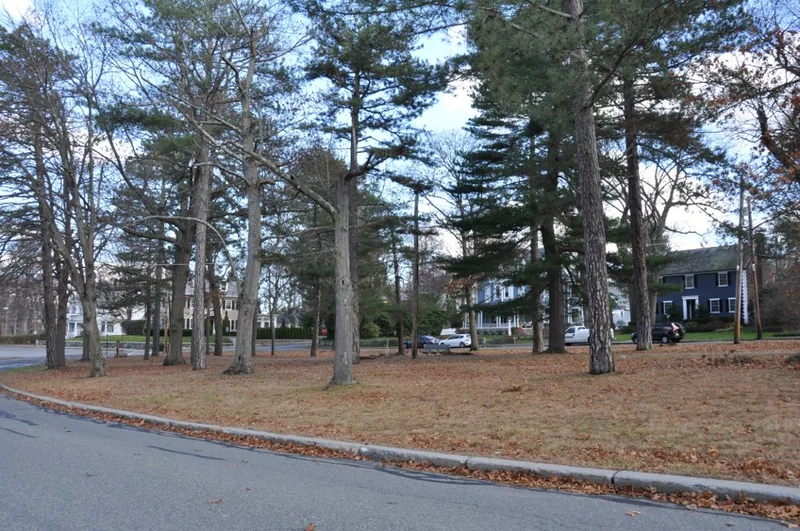
Eight houses along Park Street, at the southern end of Kenrick Park in Newton Corner, were added to an existing historic district after a 1983 survey found them to be a significant cluster of earlier unsurveyed buildings. Dating from 1830 to 1896, they show the range of nineteenth-century residential styles: a temple-front Greek Revival house with Doric columns at 237 Park Street, a pattern-book Gothic house from 1865, an elaborate Queen Anne house with a red sandstone first story, and a formal brick Georgian Revival house from 1896. The street was laid out on part of George Lord's estate, and large suburban houses were built after the estate was sold following his death in 1893. Scale and setback remain uniform, and the block keeps its residential character. The area was added because it reflects Newton's growth as a fashionable streetcar-era suburb and the quality of its architecture.
Machine-generated summary. This summary was generated by a language model from the official nomination document and has not been reviewed line by line by an editor. It may contain errors. Check the source document before relying on any detail. Source: nomination document (PDF) · catalog entry. Generated October 2026 (model claude-sonnet-5-5, prompt v1.0-2026-10-29).
| Period of significance | 1830-1896 |
|---|---|
| Styles | Greek Revival, Gothic Revival, Queen Anne, Colonial/Georgian Revival |
| Areas of significance | Architecture, Social History |
| Acreage | 4.3 |
| Boundary source | NPS cultural-resource GIS polygon |
| Full listing page | Farlow and Kendrick Parks Historic District (Boundary Increase) (property record) |
What listing means for this property
This is a historic district. Buildings within its boundary are either contributing (they add to the district's significance) or non-contributing. Owners of contributing income-producing buildings can claim the 20% federal rehabilitation tax credit; homeowners should look at state credits. National Register districts impose no design review by themselves; a local historic district ordinance, if one exists, does (the difference explained).
General information, not legal or tax advice. Rules change; confirm with your State Historic Preservation Office or a qualified adviser.