Elm Bank

Why it's listed
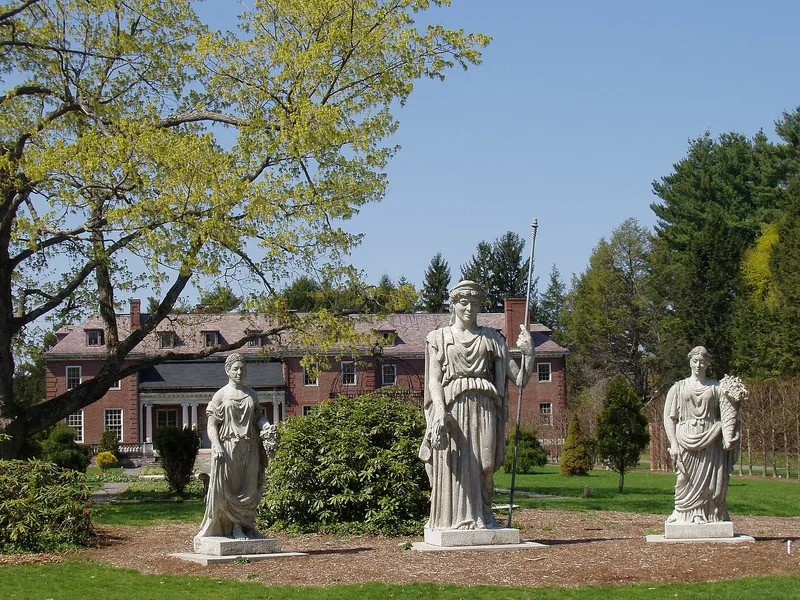
Elm Bank is a 182-acre estate on a peninsula formed by the Charles River, on the Dover-Wellesley border about 16 miles southwest of Boston. Its centerpiece is Baltzell House, a three-story brick Neo-Georgian mansion begun in 1907 for Alice Cheney Baltzell and Dr. William Hewson Baltzell. The New York firm Carrere and Hastings designed it with classical symmetry, Flemish bond brickwork, marble steps, a slate roof and richly ornamented interiors. It replaced an earlier Stick Style summer house built by her father, Benjamin P. Cheney. Surrounding the house are a brick carriage house, two Tudor Revival houses from about 1876, a boathouse, a garage, stone bridges and a tennis court. The Olmsted Brothers landscaped the grounds between 1914 and 1927, adding English and Oriental gardens, a stone-faced garden structure known as the Temple, and a canal bridge. Later owners included the Stigmatine Fathers and a vocational school, and the mansion has been vacant since 1981.
Machine-generated summary. This summary was generated by a language model from the official nomination document and has not been reviewed line by line by an editor. It may contain errors. Check the source document before relying on any detail. Source: nomination document (PDF) · catalog entry. Generated October 2026 (model claude-sonnet-5-5, prompt v1.0-2026-10-29).
| Styles | Neo-Georgian (Baltzell House); Georgian Revival and Tudor Revival outbuildings |
|---|---|
| Areas of significance | Community Planning and Development, Landscape Architecture, Architecture, Social History |
| Acreage | 182 |
| Boundary source | NPS cultural-resource GIS polygon |
| Full listing page | Elm Bank (property record) |
What listing means for this property
This is a historic district. Buildings within its boundary are either contributing (they add to the district's significance) or non-contributing. Owners of contributing income-producing buildings can claim the 20% federal rehabilitation tax credit; homeowners should look at state credits. National Register districts impose no design review by themselves; a local historic district ordinance, if one exists, does (the difference explained).
Noted as vacant in the nomination. Nomination documents can be decades old; current status may differ. If you are considering buying an empty listed property, read the due-diligence checklist.
General information, not legal or tax advice. Rules change; confirm with your State Historic Preservation Office or a qualified adviser.