Edward's Plain-Dowse's Corner Historic District

Why it's listed
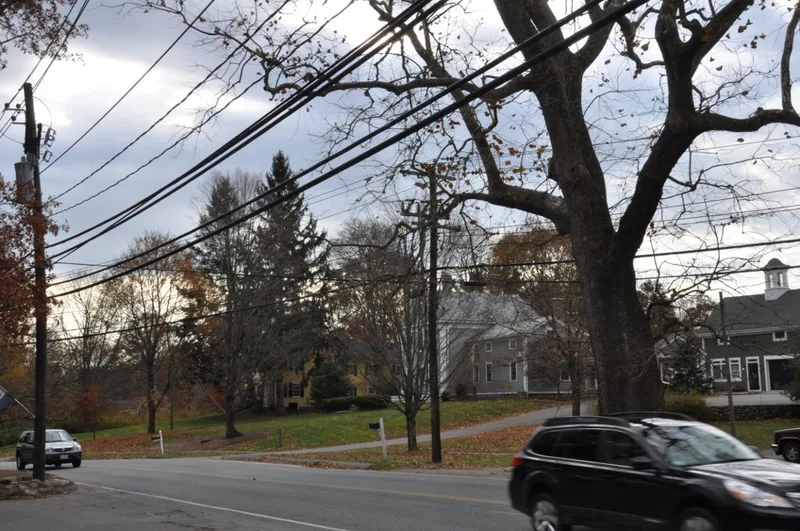
Along North Main Street in Sherborn, Massachusetts, a string of 33 buildings and an old burial ground forms a semirural district of about 87 acres. Most buildings are wood-frame houses of no more than two and a half stories, ranging from a Georgian residence of about 1750 to a single Queen Anne house of 1880. Federal and Greek Revival styles dominate, reflecting prosperity between the Revolution and the Civil War. The area grew into a node of light manufacturing, with tanners, whipmakers, blacksmiths, gunmakers, cider makers and shoe manufacturers working here. Members of the Dowse family, for whom Dowse's Corner is named, built six houses during the 1840-1860 building boom and ran shoe and whip businesses. A stone edge-tool factory of 1796, a schoolhouse and a cider mill survive, now mostly converted to homes. Only two buildings are considered intrusions. The district was recognised for its intact setting, its architecture, its links to local families and its potential archaeological sites.
Machine-generated summary. This summary was generated by a language model from the official nomination document and has not been reviewed line by line by an editor. It may contain errors. Check the source document before relying on any detail. Source: nomination document (PDF) · catalog entry. Generated October 2026 (model claude-sonnet-5-5, prompt v1.0-2026-10-29).
| Styles | Georgian vernacular, Federal, Greek Revival, Italianate, Gothic Revival and Queen Anne |
|---|---|
| Areas of significance | Industry, Community Planning and Development, Commerce, Agriculture, Architecture |
| Acreage | 87 |
| Boundary source | NPS cultural-resource GIS polygon |
| Full listing page | Edward's Plain-Dowse's Corner Historic District (property record) |
What listing means for this property
This is a historic district. Buildings within its boundary are either contributing (they add to the district's significance) or non-contributing. Owners of contributing income-producing buildings can claim the 20% federal rehabilitation tax credit; homeowners should look at state credits. National Register districts impose no design review by themselves; a local historic district ordinance, if one exists, does (the difference explained).
General information, not legal or tax advice. Rules change; confirm with your State Historic Preservation Office or a qualified adviser.