East Village Historic District

Why it's listed
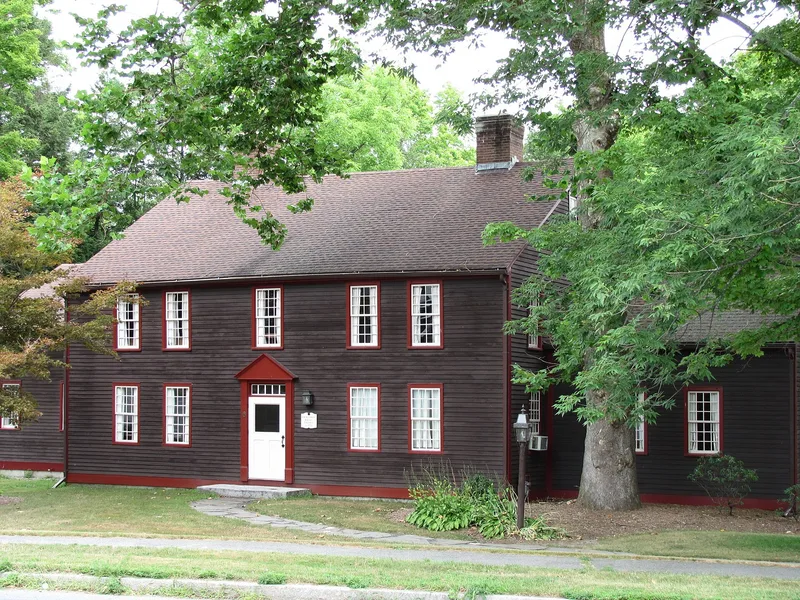
East Village is a 61-acre district in Amherst, Massachusetts, spreading outward from a long, narrow common at the meeting of Main, North East and South East Streets. It holds 49 structures, 37 of them contributing, set well back on large, tree-shaded lots. Most are wood or brick buildings of the early to mid 19th century, with Greek Revival the dominant style alongside Georgian and Federal houses and single Italianate and Queen Anne examples. Notable buildings include the 1754 Noah Dickinson House, the 1758 Daniel Kellogg House, the 1772 Dickinson-Baggs Tavern, the 1839 Second Congregational Church and a working dairy farm. The village served as Amherst's civic and residential center from the early 18th century until Amherst College opened in 1821 and the 1853 railroad drew development westward. That shift left East Village largely unchanged, preserving its early buildings and setting. Buried remains of lost structures, including a 1737 tavern and the first meetinghouse, add archaeological interest.
Machine-generated summary. This summary was generated by a language model from the official nomination document and has not been reviewed line by line by an editor. It may contain errors. Check the source document before relying on any detail. Source: nomination document (PDF) · catalog entry. Generated October 2026 (model claude-sonnet-5-5, prompt v1.0-2026-10-29).
| Period of significance | 1754-1900 |
|---|---|
| Styles | Predominantly Greek Revival, with Georgian, Federal, Italianate and Queen Anne/Stick Style examples |
| Areas of significance | Industry, Commerce, Architecture |
| Acreage | 61 |
| Boundary source | NPS cultural-resource GIS polygon |
| Full listing page | East Village Historic District (property record) |
What listing means for this property
This is a historic district. Buildings within its boundary are either contributing (they add to the district's significance) or non-contributing. Owners of contributing income-producing buildings can claim the 20% federal rehabilitation tax credit; homeowners should look at state credits. National Register districts impose no design review by themselves; a local historic district ordinance, if one exists, does (the difference explained).
General information, not legal or tax advice. Rules change; confirm with your State Historic Preservation Office or a qualified adviser.