East Lawn Cemetery and Sherman Burbank Memorial Chapel

Why it's listed
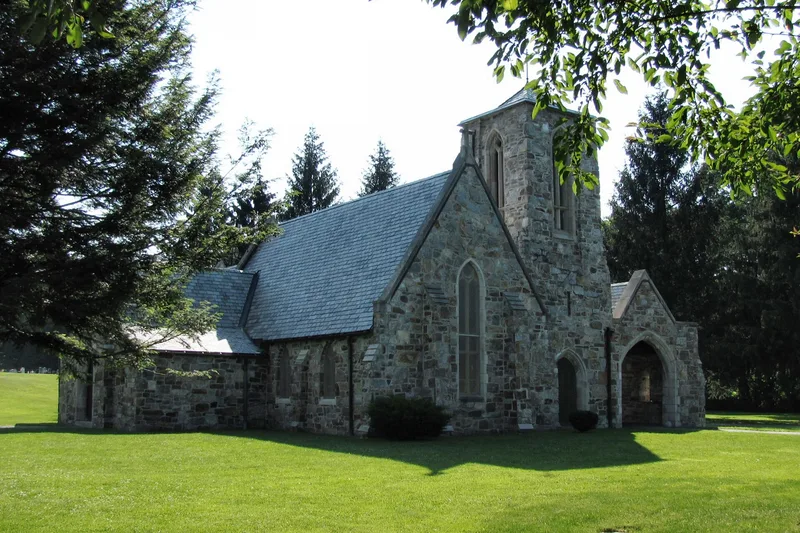
East Lawn Cemetery occupies a sloping site on the south side of Main Street in Williamstown, Massachusetts. Begun in 1842 on a two-acre parcel, it grew through gifts and purchases of land. Major improvements in 1898-1899 gave it a park-like plan, with lawns, new drives, a stone entrance wall and perimeter fencing, and an Old Veterans' Circle was dedicated in 1900. The nominated 19 acres hold most of the graves, including marble obelisks, a Medal of Honor recipient's grave, and a small white marble Lloyd family mausoleum. At the front stands the Sherman Burbank Memorial Chapel, built in 1936 to designs by Philadelphia architect Frank Rushmore Watson. Its walls are local yellow and brown quartzite trimmed with Indiana limestone, and it has a tower, porte-cochere and receiving vault. Built by contractor David Deans using Italian stone masons, it reflects Late Gothic Revival ideas about medieval-style construction. The cemetery remains in use.
Machine-generated summary. This summary was generated by a language model from the official nomination document and has not been reviewed line by line by an editor. It may contain errors. Check the source document before relying on any detail. Source: nomination document (PDF) · catalog entry. Generated October 2026 (model claude-sonnet-5-5, prompt v1.0-2026-10-29).
| Styles | Late Gothic Revival |
|---|---|
| Areas of significance | Architecture, Community Planning and Development |
| Acreage | 19 |
| Boundary source | NPS cultural-resource GIS polygon |
| Full listing page | East Lawn Cemetery and Sherman Burbank Memorial Chapel (property record) |
What listing means for this property
This is a historic district. Buildings within its boundary are either contributing (they add to the district's significance) or non-contributing. Owners of contributing income-producing buildings can claim the 20% federal rehabilitation tax credit; homeowners should look at state credits. National Register districts impose no design review by themselves; a local historic district ordinance, if one exists, does (the difference explained).
General information, not legal or tax advice. Rules change; confirm with your State Historic Preservation Office or a qualified adviser.