Eagle Hill Historic District

Why it's listed
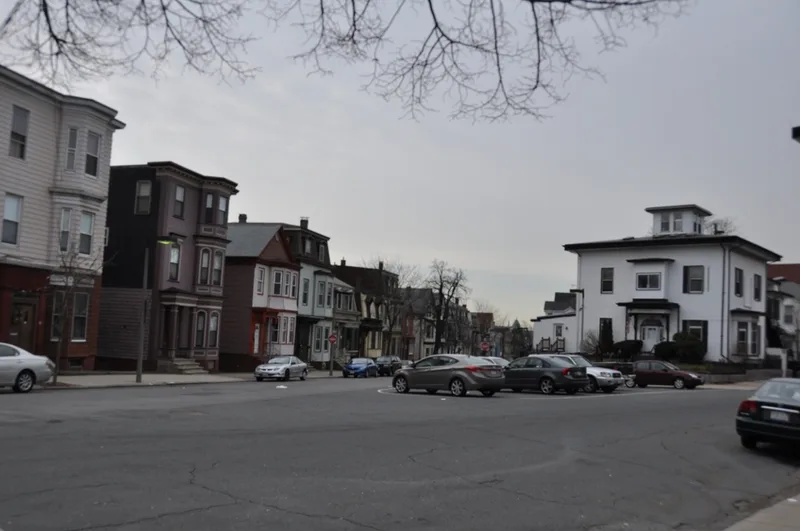
Eagle Hill is a hilltop neighborhood in East Boston, Massachusetts, built mostly in the third quarter of the nineteenth century on land subdivided and sold by the East Boston Company. Its streets follow the contours of the hill, and most houses are two-and-a-half or three stories with narrow three-bay facades, built as single dwellings, duplexes or rows. Greek Revival houses came first, followed by a large number of Italianate buildings, with Queen Anne, Classical and Colonial Revival infill. Early residents included clipper ship builders such as Donald McKay, whose 1844 house stands at 80 White Street. A few large villa-style houses stand on spacious lots, while churches, schools and a former fire station add institutional variety. Later growth served a skilled working-class and middle-class population. With 437 contributing buildings and little demolition since, the district keeps a remarkably intact nineteenth-century urban character, which is why it was listed.
Machine-generated summary. This summary was generated by a language model from the official nomination document and has not been reviewed line by line by an editor. It may contain errors. Check the source document before relying on any detail. Source: nomination document (PDF) · catalog entry. Generated October 2026 (model claude-sonnet-5-5, prompt v1.0-2026-10-29).
| Styles | Greek Revival, Italianate, Classical, Colonial Revival, Gothic Revival, Queen Anne |
|---|---|
| Areas of significance | Architecture, Maritime History, Community Planning and Development, Social History |
| Acreage | 40 |
| Boundary source | NPS cultural-resource GIS polygon |
| Full listing page | Eagle Hill Historic District (property record) |
What listing means for this property
This is a historic district. Buildings within its boundary are either contributing (they add to the district's significance) or non-contributing. Owners of contributing income-producing buildings can claim the 20% federal rehabilitation tax credit; homeowners should look at state credits. National Register districts impose no design review by themselves; a local historic district ordinance, if one exists, does (the difference explained).
General information, not legal or tax advice. Rules change; confirm with your State Historic Preservation Office or a qualified adviser.