Dwight Manufacturing Company Housing District

Why it's listed
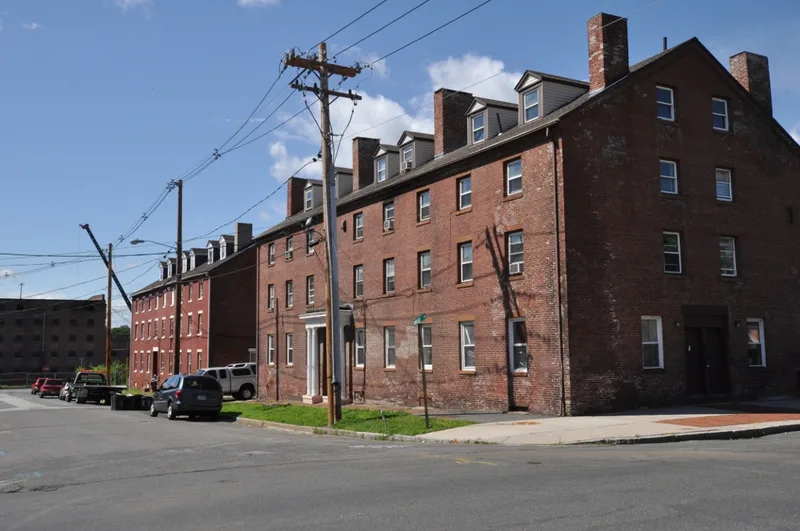
Brick boarding houses and family dwellings in Chicopee Center preserve part of a planned textile community built for workers of the Dwight Manufacturing Company. The houses along Front, Dwight, Exchange, Depot and Chestnut Streets date mostly from the 1830s and 1840s and were largely the work of builder Charles McClallan, whose Greek Revival designs feature handsome brickwork. Types include a three-and-a-half-story boarding house with a Doric portico, smaller two-story double houses with patterned gables, and single-family homes. A Stick Style boarding house was added in the 1870s. The company housed young female mill workers in supervised boarding houses until about 1845, then rented to immigrant families. The mills closed in 1927, and the tenements were sold to private owners. Many original houses were demolished for commercial development, but the surviving group is mostly in good condition and still used as homes. The district is considered notable as a rare early industrial housing group and as an example of factory-owner paternalism.
Machine-generated summary. This summary was generated by a language model from the official nomination document and has not been reviewed line by line by an editor. It may contain errors. Check the source document before relying on any detail. Source: nomination document (PDF) · catalog entry. Generated October 2026 (model claude-sonnet-5-5, prompt v1.0-2026-10-29).
| Period of significance | 1800-1899 |
|---|---|
| Styles | Greek Revival, with a vernacular brick boarding house type and one Stick Style building from the 1870s |
| Areas of significance | Industry, Community Planning and Development |
| Acreage | 7 |
| Boundary source | NPS cultural-resource GIS polygon |
| Full listing page | Dwight Manufacturing Company Housing District (property record) |
What listing means for this property
This is a historic district. Buildings within its boundary are either contributing (they add to the district's significance) or non-contributing. Owners of contributing income-producing buildings can claim the 20% federal rehabilitation tax credit; homeowners should look at state credits. National Register districts impose no design review by themselves; a local historic district ordinance, if one exists, does (the difference explained).
General information, not legal or tax advice. Rules change; confirm with your State Historic Preservation Office or a qualified adviser.