Downtown Lawrence Historic District

Why it's listed
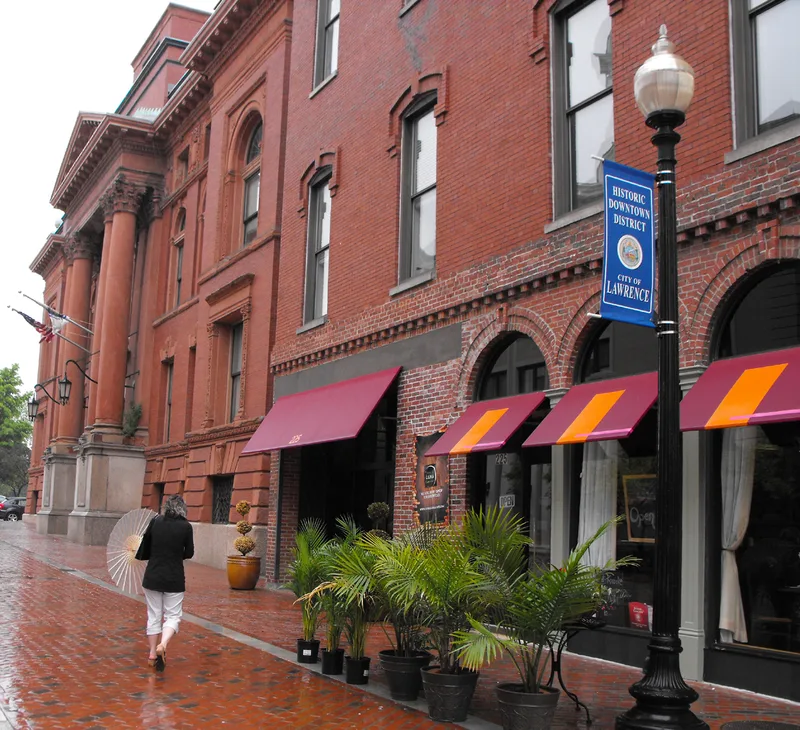
Downtown Lawrence grew from the 1845 plan by the Essex Company, which laid the city out in parallel zones running north from the Merrimack River: industry, canal, boarding houses, commerce, and finally the Common ringed by institutions. The historic district preserves the commercial and civic heart of that plan. It includes the 17½-acre Common, donated in 1848 and laid out as Victorian open space, along with the Beaux Arts Essex County Courthouse, the Georgian Revival City Hall with its clock-bell tower, and a long run of brick commercial blocks along Essex Street. Essex Street was made 80 feet wide and required buildings of brick, stone, or iron at least three stories high. The result is a consistent streetscape of Greek Revival, Italianate, Queen Anne, Romanesque, Classical, and Art Deco buildings from the 1850s through the 1920s. The Common also hosted mass meetings during the 1912 strike. Much of the surrounding downtown has been altered or demolished, which makes this group the most intact in the city.
Machine-generated summary. This summary was generated by a language model from the official nomination document and has not been reviewed line by line by an editor. It may contain errors. Check the source document before relying on any detail. Source: nomination document (PDF) · catalog entry. Generated October 2026 (model claude-sonnet-5-5, prompt v1.0-2026-10-29).
| Styles | Greek Revival, Italianate, Queen Anne, Romanesque, Beaux Arts Classical, Georgian Revival, Art Deco/Moderne |
|---|---|
| Areas of significance | Community Planning and Development, Landscape Architecture, Commerce, Politics/Government, Architecture |
| Acreage | 25.5 |
| Boundary source | NPS cultural-resource GIS polygon |
| Full listing page | Downtown Lawrence Historic District (property record) |
What listing means for this property
This is a historic district. Buildings within its boundary are either contributing (they add to the district's significance) or non-contributing. Owners of contributing income-producing buildings can claim the 20% federal rehabilitation tax credit; homeowners should look at state credits. National Register districts impose no design review by themselves; a local historic district ordinance, if one exists, does (the difference explained).
General information, not legal or tax advice. Rules change; confirm with your State Historic Preservation Office or a qualified adviser.