Dedham Village Historic District

Why it's listed
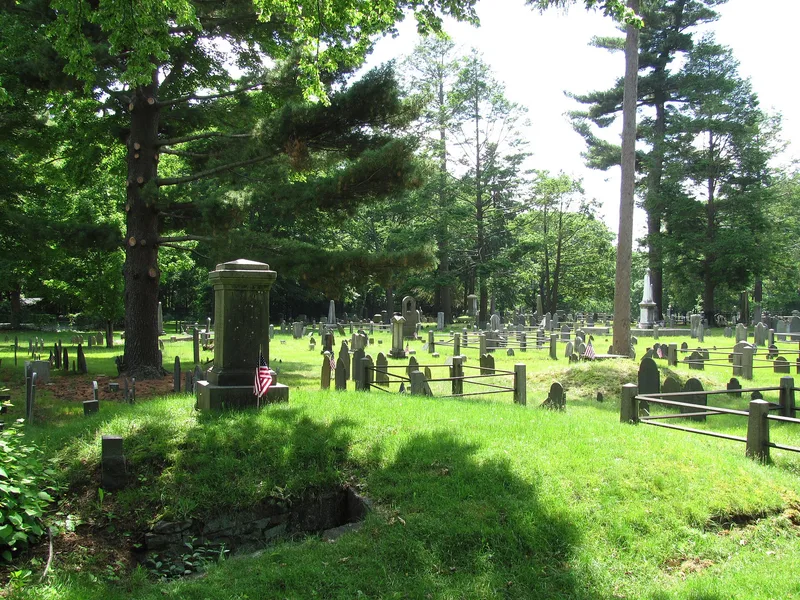
Dedham Village Historic District covers about 55 acres of the town's residential and institutional heart, along High Street, Court Street and the streets connecting them. It holds 247 contributing resources, mostly detached wood-frame houses in the Federal and Greek Revival styles, with Georgian and Colonial Revival examples as well. The oldest surviving fabric is a ca. 1680 ell on the Gay Tavern. Four churches, county courthouses, a registry of deeds, a former jail, a library and the historical society stand mainly near the High and Court intersection, where the first meetinghouse was built in 1638. Open spaces include the Great Common, Little Common, Franklin Square and the Village Cemetery, with gravestones from 1678. Development surged after Dedham became the county seat in 1793 and turnpikes were routed along Court and High Streets in 1802 and 1804. The district also includes the Norfolk County Courthouse, a National Historic Landmark.
Machine-generated summary. This summary was generated by a language model from the official nomination document and has not been reviewed line by line by an editor. It may contain errors. Check the source document before relying on any detail. Source: nomination document (PDF) · catalog entry. Generated October 2026 (model claude-sonnet-5-5, prompt v1.0-2026-10-29).
| Styles | Federal, Greek Revival, Colonial Revival, Georgian, Italianate, Romanesque Revival, Second Empire, Queen Anne, Classical Revival, Art Deco |
|---|---|
| Areas of significance | Architecture, Politics/Government, Transportation, Community Planning and Development, Religion, Social History, Commerce |
| Acreage | 55 |
| Boundary source | NPS cultural-resource GIS polygon |
| Full listing page | Dedham Village Historic District (property record) |
What listing means for this property
This is a historic district. Buildings within its boundary are either contributing (they add to the district's significance) or non-contributing. Owners of contributing income-producing buildings can claim the 20% federal rehabilitation tax credit; homeowners should look at state credits. National Register districts impose no design review by themselves; a local historic district ordinance, if one exists, does (the difference explained).
General information, not legal or tax advice. Rules change; confirm with your State Historic Preservation Office or a qualified adviser.