Craigville Historic District

Why it's listed
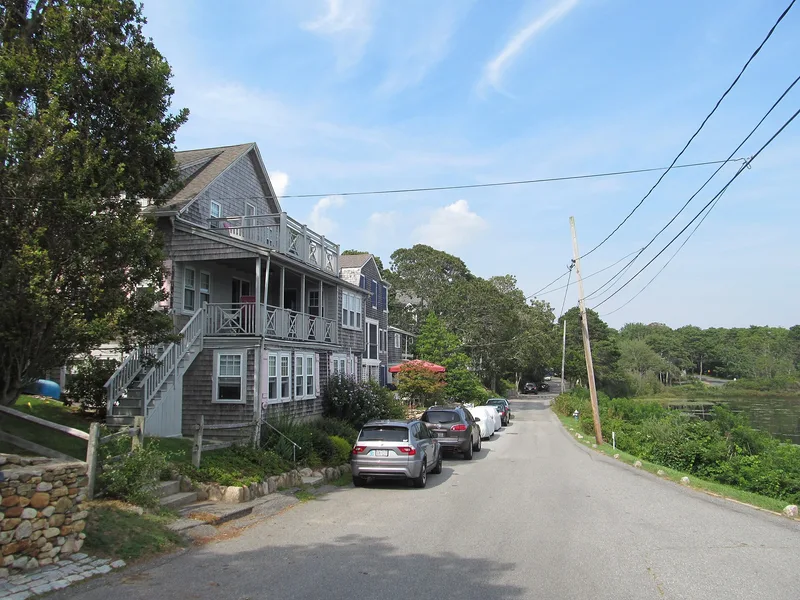
Craigville is a small camp meeting community on a bluff overlooking Centerville Harbor and Nantucket Sound. The New England Convention of Christian Churches bought 160 acres of the Perry Farm in 1871 and held its first camp meeting on August 1, 1872. Streets were laid out in grid and curving patterns around a triangular park with a Tabernacle at its northern end, and at least 288 small lots were offered for sale or lease. Within a year, 31 cottages, two hotels, a store and a first Tabernacle had been built. The present Tabernacle dates from 1887. The district covers about eight acres and holds 26 contributing buildings, including Carpenter Gothic cottages such as Alpha Cottage, the store, the post office and the Craigville Inn. Its boundaries exclude later year-round houses. It was listed for its link to the camp meeting movement and for its well-preserved camp architecture. The grounds are still used as a conference center.
Machine-generated summary. This summary was generated by a language model from the official nomination document and has not been reviewed line by line by an editor. It may contain errors. Check the source document before relying on any detail. Source: nomination document (PDF) · catalog entry. Generated October 2026 (model claude-sonnet-5-5, prompt v1.0-2026-10-29).
| Period of significance | 1871-c1930 |
|---|---|
| Styles | Carpenter Gothic cottages, with Queen Anne (Tabernacle, Craigville Inn), Colonial Revival, Shingle Style and vernacular buildings |
| Areas of significance | Architecture, Religion |
| Acreage | 8.1 |
| Boundary source | NPS cultural-resource GIS polygon |
| Full listing page | Craigville Historic District (property record) |
What listing means for this property
This is a historic district. Buildings within its boundary are either contributing (they add to the district's significance) or non-contributing. Owners of contributing income-producing buildings can claim the 20% federal rehabilitation tax credit; homeowners should look at state credits. National Register districts impose no design review by themselves; a local historic district ordinance, if one exists, does (the difference explained).
General information, not legal or tax advice. Rules change; confirm with your State Historic Preservation Office or a qualified adviser.