Cottage-Freeman Historic District

Why it's listed
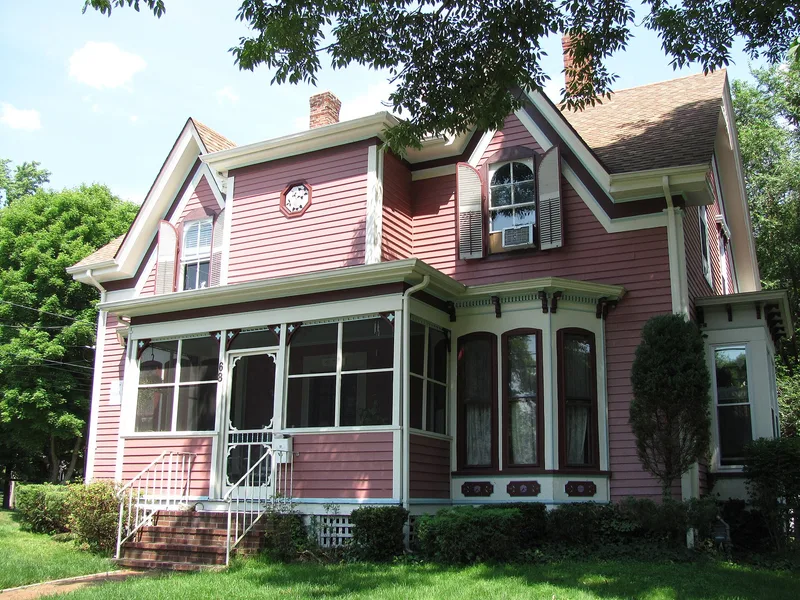
This residential district in North Attleborough, Massachusetts, covers about 11 acres beside the Ten Mile River and includes Cottage Street, Freeman Street, Park Lane and part of Commonwealth Avenue. It has 39 contributing buildings, nearly all wood-frame houses, most of them 1½ stories with end-gable roofs. Two late Federal houses on Park Lane date to about 1835, while most of the rest were built between 1870 and 1890. Every house has a documented link to the local jewelry industry, whether built or owned by a jewelry company or manufacturer, or occupied by a jewelry worker. Most were privately owned by individuals rather than companies, a pattern typical of urbanizing areas. The houses follow two basic plans, a symmetrical center-entrance type and an asymmetrical side-hall type, and show styles such as Gothic Revival and mansard-roofed cottages. The district was listed for its role in community development and for its representative late 19th-century domestic architecture.
Machine-generated summary. This summary was generated by a language model from the official nomination document and has not been reviewed line by line by an editor. It may contain errors. Check the source document before relying on any detail. Source: nomination document (PDF) · catalog entry. Generated October 2026 (model claude-sonnet-5-5, prompt v1.0-2026-10-29).
| Period of significance | ca. 1835-1953 |
|---|---|
| Styles | Early Republic: Federal; Late Victorian: Queen Anne, Italianate; Mid 19th Century: Gothic Revival |
| Areas of significance | Architecture, Community Planning and Development |
| Acreage | 11 |
| Boundary source | NPS cultural-resource GIS polygon |
| Full listing page | Cottage-Freeman Historic District (property record) |
What listing means for this property
This is a historic district. Buildings within its boundary are either contributing (they add to the district's significance) or non-contributing. Owners of contributing income-producing buildings can claim the 20% federal rehabilitation tax credit; homeowners should look at state credits. National Register districts impose no design review by themselves; a local historic district ordinance, if one exists, does (the difference explained).
General information, not legal or tax advice. Rules change; confirm with your State Historic Preservation Office or a qualified adviser.