Cottage Farm Historic District

Why it's listed
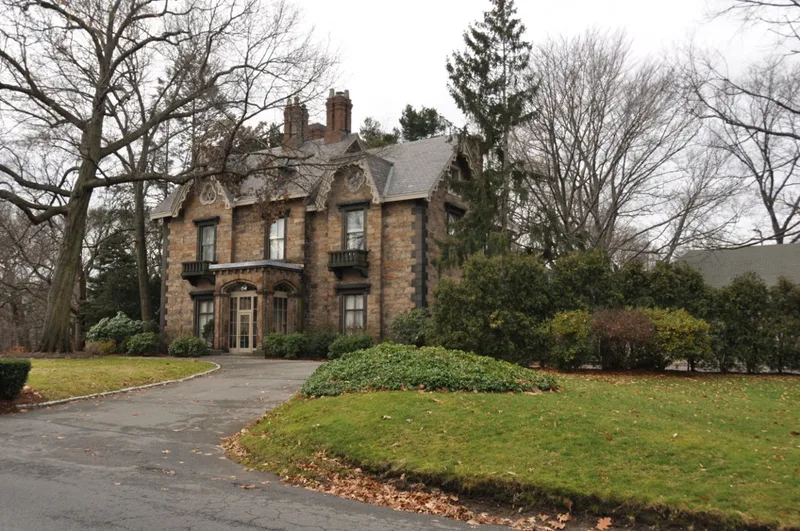
Cottage Farm is a 67-acre neighborhood in the northeast corner of Brookline, Massachusetts, near downtown Boston and with access to the Charles River. It consists mainly of single-family houses, with a few educational and religious institutions, built of brick, stone, shingles and stucco. The oldest building is the stone Sears-Talbot House, built before 1844 in an early Gothic Revival style. Development began in 1850, when Amos A. Lawrence bought 200 acres and, with his brother William, began subdividing the land. The first houses, designed in the Gothic "cottage" manner popularized by Andrew Jackson Downing, gave the area its name. Later buildings include Queen Anne houses by builder John Wales, Mansard houses of the 1880s, Georgian Revival residences of the early 1900s, and the 1936 Gibbs-Katz House, described as the first International Style building in the Boston/Cambridge area. The district was listed for its architecture and its link to Lawrence, whose family financed many early structures and helped give the area a consistent scale.
Machine-generated summary. This summary was generated by a language model from the official nomination document and has not been reviewed line by line by an editor. It may contain errors. Check the source document before relying on any detail. Source: nomination document (PDF) · catalog entry. Generated October 2026 (model claude-sonnet-5-5, prompt v1.0-2026-10-29).
| Styles | Gothic Revival, Mansard, Queen Anne and Georgian Revival, with some Shingle Style, Italianate, Spanish Mission and International Style examples |
|---|---|
| Areas of significance | Community Planning and Development, Architecture, Social History |
| Acreage | 60 |
| Boundary source | NPS cultural-resource GIS polygon |
| Full listing page | Cottage Farm Historic District (property record) |
What listing means for this property
This is a historic district. Buildings within its boundary are either contributing (they add to the district's significance) or non-contributing. Owners of contributing income-producing buildings can claim the 20% federal rehabilitation tax credit; homeowners should look at state credits. National Register districts impose no design review by themselves; a local historic district ordinance, if one exists, does (the difference explained).
General information, not legal or tax advice. Rules change; confirm with your State Historic Preservation Office or a qualified adviser.