Coram Shipyard Historic District

The National Park Service has not published a boundary polygon for this district; the map shows the listed properties inside it and the district's reference point.
Why it's listed
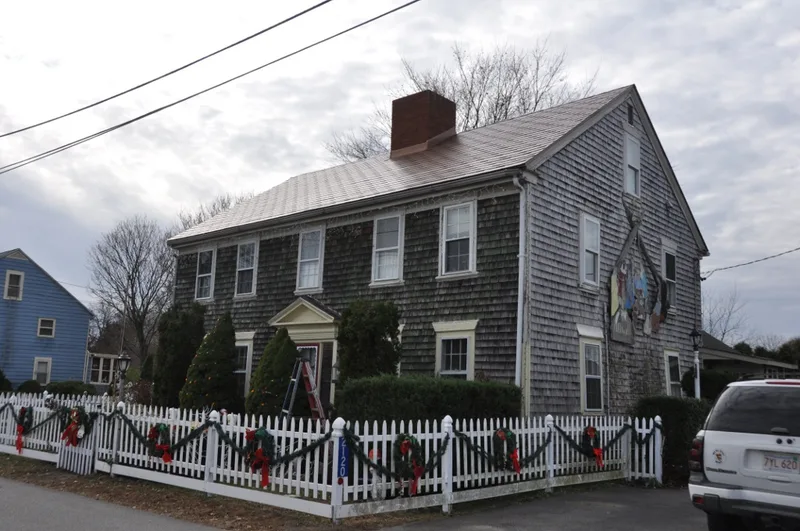
Along the west bank of the Taunton River in Dighton, this small district preserves the core of a colonial shipbuilding site. It includes the John Hathaway House (ca. 1700) and the Thomas Coram House (ca. 1699), two five-bay Georgian homes built close to Water Street, along with a rectangular stone wharf of about 50 by 75 feet dating from ca. 1698. Across the street, a yacht club clubhouse built around 1950 occupies part of the former shipyard, though the southern portion remains open grass and marsh. The Coram yard built mostly sloops and brigantines for coastal trade with the West Indies, and later yards on the same site were run by Bowen and Hathaway and by Smith and Wardwell. Shipbuilding in Dighton ended in 1874 with the launch of the William Cobb. The Coram House has lost much original fabric, but both homes still convey early settlement and maritime development, and the site may hold buried archeological evidence.
Machine-generated summary. This summary was generated by a language model from the official nomination document and has not been reviewed line by line by an editor. It may contain errors. Check the source document before relying on any detail. Source: nomination document (PDF) · catalog entry. Generated October 2026 (model claude-sonnet-5-5, prompt v1.0-2026-10-29).
| Period of significance | 1698-1885 |
|---|---|
| Styles | Colonial: Georgian |
| Areas of significance | Transportation, Maritime History, Commerce, Architecture |
| Acreage | 2.1 |
| Boundary source | not published |
| Full listing page | Coram Shipyard Historic District (property record) |
What listing means for this property
This is a historic district. Buildings within its boundary are either contributing (they add to the district's significance) or non-contributing. Owners of contributing income-producing buildings can claim the 20% federal rehabilitation tax credit; homeowners should look at state credits. National Register districts impose no design review by themselves; a local historic district ordinance, if one exists, does (the difference explained).
General information, not legal or tax advice. Rules change; confirm with your State Historic Preservation Office or a qualified adviser.