Commonwealth Avenue Historic District

Why it's listed
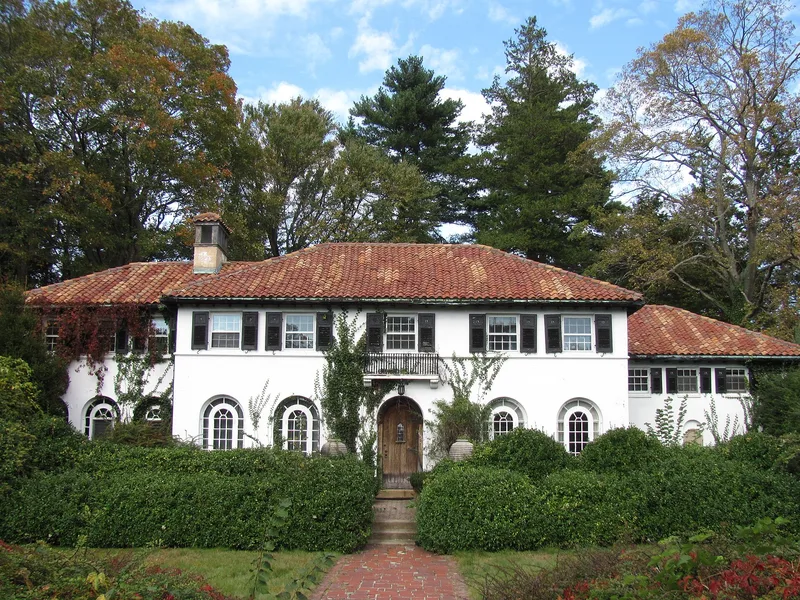
Commonwealth Avenue in Newton, Massachusetts, is a broad, curving boulevard laid out in the 1890s with a center strip first used for a double-track electric railroad. The historic district covers its eastern half, from Boston College to Walnut Street, and includes 188 properties. Landowners known as the Newton Boulevard Syndicate helped secure the route, and the road opened on October 11, 1895. It gave central Newton its first major east-west connection and opened sparsely settled land to development. Residents' dislike of apartment blocks led to substantial single-family houses, most built between the 1890s and 1920s. Colonial Revival houses, often in brick, set the dominant tone. Classical Revival, Shingle, Queen Anne, Craftsman, Tudor and Spanish Colonial examples add variety. Architect Harry Morton Ramsay designed the largest number of houses along the avenue. A few small commercial blocks near Centre Street date from 1914 to 1922. Little has been built since the mid-twentieth century.
Machine-generated summary. This summary was generated by a language model from the official nomination document and has not been reviewed line by line by an editor. It may contain errors. Check the source document before relying on any detail. Source: nomination document (PDF) · catalog entry. Generated October 2026 (model claude-sonnet-5-5, prompt v1.0-2026-10-29).
| Styles | Colonial Revival predominates, with Classical Revival, Queen Anne, Shingle Style, Craftsman, Tudor Revival and Spanish Colonial Revival examples |
|---|---|
| Areas of significance | Community Planning and Development, Architecture |
| Acreage | 55.9 |
| Boundary source | NPS cultural-resource GIS polygon |
| Full listing page | Commonwealth Avenue Historic District (property record) |
What listing means for this property
This is a historic district. Buildings within its boundary are either contributing (they add to the district's significance) or non-contributing. Owners of contributing income-producing buildings can claim the 20% federal rehabilitation tax credit; homeowners should look at state credits. National Register districts impose no design review by themselves; a local historic district ordinance, if one exists, does (the difference explained).
General information, not legal or tax advice. Rules change; confirm with your State Historic Preservation Office or a qualified adviser.