Colony Historic District

Why it's listed
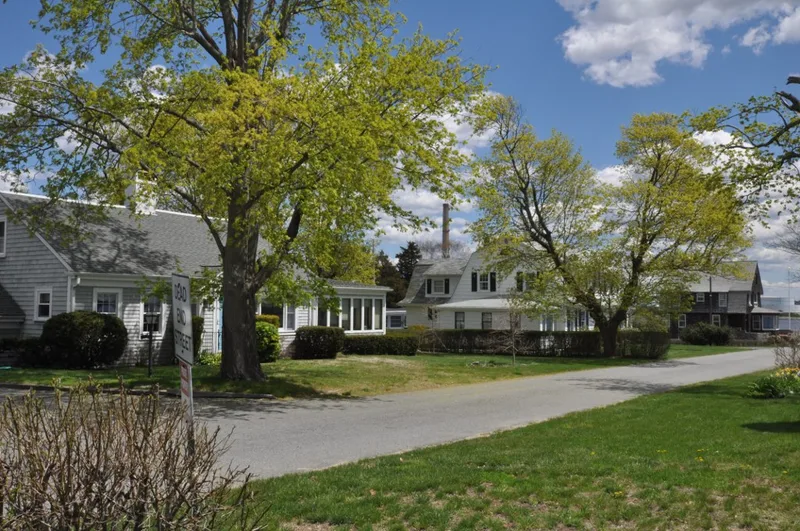
Seven cottages at the tip of Gardner's Neck in South Swansea make up this small seaside community, set between Mt. Hope Bay and Lee's River. It began in 1896, when David Anthony sold four acres to Robert Wilcox and Eric Borden, who divided the land into lots along a private road, Mattapoisett Avenue. Lot owners shared rights to the road, the beach, a boat landing and well water. Buyers were mostly Fall River businessmen seeking summer homes away from the industrial city. Five of the houses, built between 1896 and about 1930, contribute to the district. Broad gambrel roofs and wood shingle siding give the group its character, with Shingle Style cottages from 1896 and 1898 and later Colonial Revival and Dutch Colonial houses. Hurricanes in 1938 and 1954 led to heavy rebuilding on the waterfront lots. The district was recognized for its link to resort and suburban development and as an intact, distinctive group of shore cottages.
Machine-generated summary. This summary was generated by a language model from the official nomination document and has not been reviewed line by line by an editor. It may contain errors. Check the source document before relying on any detail. Source: nomination document (PDF) · catalog entry. Generated October 2026 (model claude-sonnet-5-5, prompt v1.0-2026-10-29).
| Period of significance | 1896-ca. 1930 |
|---|---|
| Styles | Shingle Style and Colonial Revival (including Dutch Colonial Revival) |
| Areas of significance | Community Planning and Development, Architecture |
| Acreage | 4.3 |
| Boundary source | NPS cultural-resource GIS polygon |
| Full listing page | Colony Historic District (property record) |
What listing means for this property
This is a historic district. Buildings within its boundary are either contributing (they add to the district's significance) or non-contributing. Owners of contributing income-producing buildings can claim the 20% federal rehabilitation tax credit; homeowners should look at state credits. National Register districts impose no design review by themselves; a local historic district ordinance, if one exists, does (the difference explained).
General information, not legal or tax advice. Rules change; confirm with your State Historic Preservation Office or a qualified adviser.