Collins Cottages Historic District

The National Park Service has not published a boundary polygon for this district; the map shows the listed properties inside it and the district's reference point.
Why it's listed
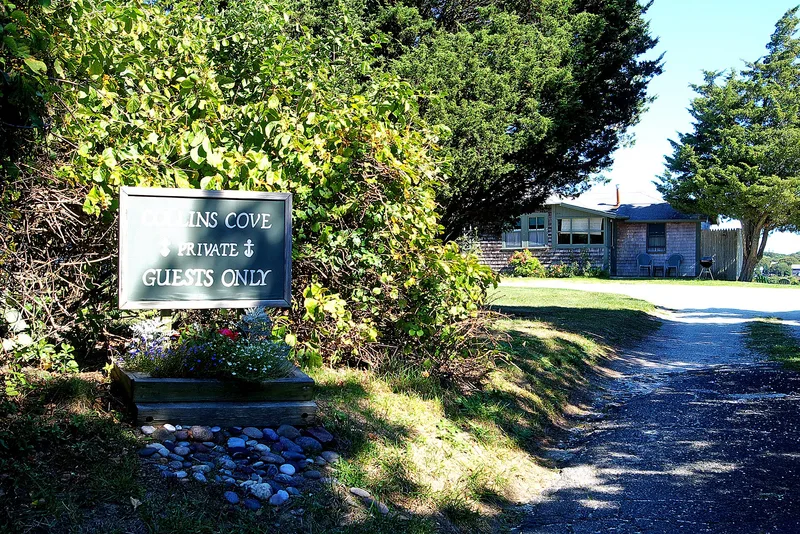
Collins Cottages is a small seaside cottage colony on Town Cove in Eastham, Massachusetts, just north of the Orleans rotary. Seven one-story, shingle-clad cottages line a shell-and-stone driveway. Six were built in 1928-29 and one in 1946. Most have screened verandas facing the water, low roofs with exposed rafter ends, and stone fireplaces, and some interior wood and framing came from the former Chatham Naval Air Station. A shucking house from 1940 and a mortared fieldstone seawall from 1936 recall the family's shellfishing work, which began in the basement of the first cottage. The district matters because it shows how automobile travel and the paving of Route 6 fed the summer resort trade on the Lower Cape. Few cottage colonies of this kind survive there, and this one keeps its simple buildings, native landscaping and long-standing family ownership, with repeat visitors across generations.
Machine-generated summary. This summary was generated by a language model from the official nomination document and has not been reviewed line by line by an editor. It may contain errors. Check the source document before relying on any detail. Source: nomination document (PDF) · catalog entry. Generated October 2026 (model claude-sonnet-5-5, prompt v1.0-2026-10-29).
| Period of significance | 1928-1949 |
|---|---|
| Styles | Late 19th and early 20th century: Craftsman; No Style |
| Areas of significance | Architecture, Entertainment/Recreation, Maritime History |
| Acreage | 2.7 |
| Boundary source | not published |
| Full listing page | Collins Cottages Historic District (property record) |
What listing means for this property
This is a historic district. Buildings within its boundary are either contributing (they add to the district's significance) or non-contributing. Owners of contributing income-producing buildings can claim the 20% federal rehabilitation tax credit; homeowners should look at state credits. National Register districts impose no design review by themselves; a local historic district ordinance, if one exists, does (the difference explained).
General information, not legal or tax advice. Rules change; confirm with your State Historic Preservation Office or a qualified adviser.