Chester Center Historic District

Why it's listed
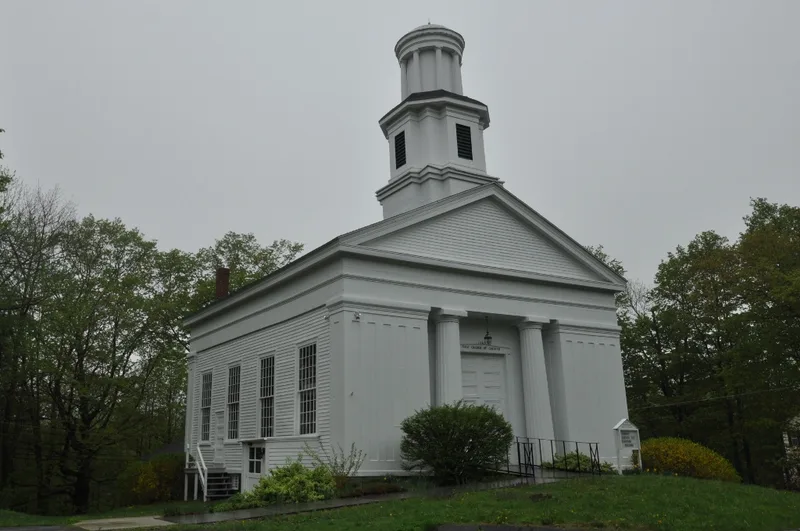
Chester Center is a hilltop meetinghouse village of about 15 acres in the uplands of Chester, Massachusetts. It holds six resources: the First Congregational Church of 1840, the town burying ground begun in 1769, the Rev. Aaron Bascom House of 1769, the Searles House of 1787, the 1796 schoolhouse and the Dr. Anson Boies House of 1810. The church is a Greek Revival frame building with Doric columns and a two-stage belfry, linked to the design work of Henry A. Sykes of Suffield, Connecticut. The village grew from the town's settlement in 1763 and served as its religious and civic focus. After a turnpike bypassed it in 1800 and the railroad followed in 1842, the town's economic center moved to the mill villages, and the last town meetings here were held in 1855. Because little was built afterward, the village remains an unusually intact example of an early nineteenth-century meetinghouse village, with New England Colonial, Federal and Greek Revival buildings.
Machine-generated summary. This summary was generated by a language model from the official nomination document and has not been reviewed line by line by an editor. It may contain errors. Check the source document before relying on any detail. Source: nomination document (PDF) · catalog entry. Generated October 2026 (model claude-sonnet-5-5, prompt v1.0-2026-10-29).
| Period of significance | 1760-1842 |
|---|---|
| Styles | New England Colonial, Federal, Greek Revival |
| Areas of significance | Community Planning and Development, Architecture |
| Acreage | 15 |
| Boundary source | NPS cultural-resource GIS polygon |
| Full listing page | Chester Center Historic District (property record) |
What listing means for this property
This is a historic district. Buildings within its boundary are either contributing (they add to the district's significance) or non-contributing. Owners of contributing income-producing buildings can claim the 20% federal rehabilitation tax credit; homeowners should look at state credits. National Register districts impose no design review by themselves; a local historic district ordinance, if one exists, does (the difference explained).
General information, not legal or tax advice. Rules change; confirm with your State Historic Preservation Office or a qualified adviser.