Central Street Historic District

Why it's listed
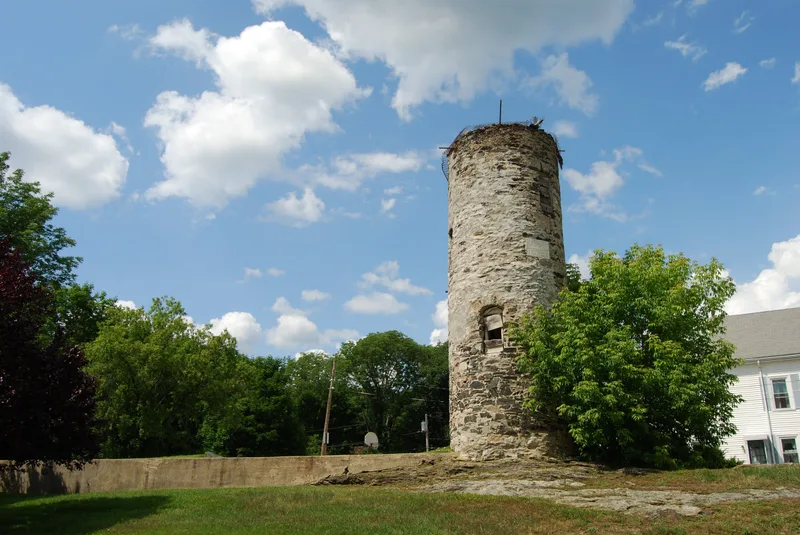
Central Street and its side streets form the historic core of Millville, a Blackstone River mill village near the Rhode Island border. The district includes 109 contributing resources: houses, churches, a school, outbuildings, and the sites of vanished mills and canal remnants. Its oldest building is the Collins Capron House, a ca. 1750 two-story center-chimney house with a pedimented entry. Greek Revival mansions, including the Edward Hall House with its Doric portico, stand near modest worker duplexes on Bow and West Streets and small gable-front cottages laid out on Chesley Street in 1864. St. John's Episcopal Church, built in 1850 from designs by Richard Upjohn, was paid for largely by mill owner Edward Hall. St. Mark's Lutheran Church was built in 1892 by Swedish mill workers. Together the buildings show how mill owners, workers and transportation links such as the Blackstone Canal and railroads shaped the village from 1732 into the 1920s.
Machine-generated summary. This summary was generated by a language model from the official nomination document and has not been reviewed line by line by an editor. It may contain errors. Check the source document before relying on any detail. Source: nomination document (PDF) · catalog entry. Generated October 2026 (model claude-sonnet-5-5, prompt v1.0-2026-10-29).
| Period of significance | 1732 to the 1920s (first documented mill site in 1732 to Bungalow cottages on Quaker Street in the 1920s); exact date range not given in the excerpt |
|---|---|
| Styles | Colonial; Greek Revival, Gothic Revival; Italianate, Second Empire, Queen Anne; Bungalow/Craftsman |
| Areas of significance | Architecture, Community Planning and Development, Engineering, Industry, Transportation |
| Acreage | 50 |
| Boundary source | NPS cultural-resource GIS polygon |
| Full listing page | Central Street Historic District (property record) |
What listing means for this property
This is a historic district. Buildings within its boundary are either contributing (they add to the district's significance) or non-contributing. Owners of contributing income-producing buildings can claim the 20% federal rehabilitation tax credit; homeowners should look at state credits. National Register districts impose no design review by themselves; a local historic district ordinance, if one exists, does (the difference explained).
General information, not legal or tax advice. Rules change; confirm with your State Historic Preservation Office or a qualified adviser.