Carpenter Homestead

Why it's listed
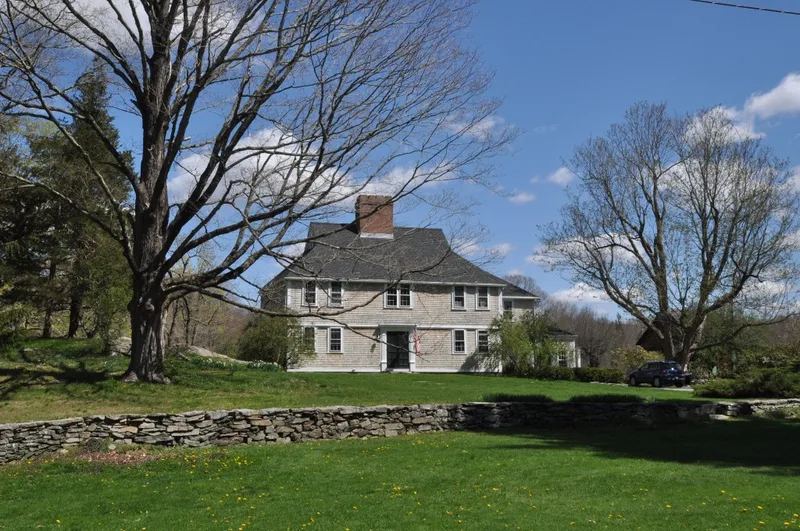
Osamequin Farm, also called the Carpenter Homestead, is a 166-acre working farm straddling Seekonk and Rehoboth, Massachusetts. Its core is a shingled farmhouse begun about 1720, with a gable-on-hip roof, a massive central chimney and a slight second-story overhang. Nearby stand a barn, an 18th-century gambrel-roof corncrib and a small skating house, set among stone walls, wells, springs, a stone dam, meadows, woodlands and ponds. The house changed through the 19th century, then underwent a careful Colonial Revival restoration in 1939-1940 designed by Providence architect Edwin Emory Cull. The property matters for more than 200 years of ownership by the Carpenter family, whose members helped keep town records and shape the community, and for ties to artists William and Ellsworth Woodward. It was listed for its local significance in history and architecture, and it still keeps the farm landscape around its buildings.
Machine-generated summary. This summary was generated by a language model from the official nomination document and has not been reviewed line by line by an editor. It may contain errors. Check the source document before relying on any detail. Source: nomination document (PDF) · catalog entry. Generated October 2026 (model claude-sonnet-5-5, prompt v1.0-2026-10-29).
| Styles | Colonial/New England Colonial, Georgian; Colonial Revival; No Style |
|---|---|
| Areas of significance | Agriculture, Architecture |
| Acreage | 166 |
| Boundary source | NPS cultural-resource GIS polygon |
| Full listing page | Carpenter Homestead (property record) |
What listing means for this property
This is a historic district. Buildings within its boundary are either contributing (they add to the district's significance) or non-contributing. Owners of contributing income-producing buildings can claim the 20% federal rehabilitation tax credit; homeowners should look at state credits. National Register districts impose no design review by themselves; a local historic district ordinance, if one exists, does (the difference explained).
General information, not legal or tax advice. Rules change; confirm with your State Historic Preservation Office or a qualified adviser.