Cambridge Grant Historic District

Why it's listed
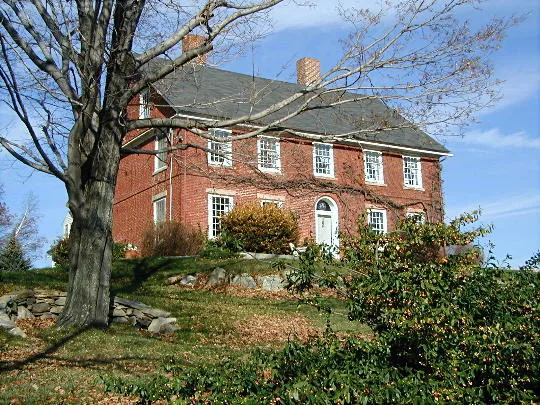
Cambridge Grant Historic District is a 322-acre rural neighborhood on the southern and eastern slopes of Russell Hill in eastern Ashburnham, Massachusetts. It takes in a large part of a colonial land grant of just over 1,000 acres. Along Russell Hill Road and Wilker Road stand seven houses built between 1788 and 1834, together with six barns and other outbuildings, stone walls, a farm pond, a burial ground, a brick kiln site and the foundations of a tanning shop and an early schoolhouse. The Thomas Russell House is the oldest surviving dwelling in the grant. The brick John Adams, Jr. House, built about 1798, was the first brick house and the largest in town. Other Federal farmhouses and a large bank barn, possibly the earliest in the region, show how local builders adapted regional forms. The district retains open pasture, orchards and woodland with long views toward Boston, giving a well-preserved picture of an early farming community.
Machine-generated summary. This summary was generated by a language model from the official nomination document and has not been reviewed line by line by an editor. It may contain errors. Check the source document before relying on any detail. Source: nomination document (PDF) · catalog entry. Generated October 2026 (model claude-sonnet-5-5, prompt v1.0-2026-10-29).
| Styles | Early Republic: Federal, vernacular; Mid 19th century: vernacular; Early 20th century: vernacular |
|---|---|
| Areas of significance | Architecture, Agriculture, Art, Exploration/Settlement, Performing Arts, Social History |
| Acreage | 322 |
| Boundary source | NPS cultural-resource GIS polygon |
| Full listing page | Cambridge Grant Historic District (property record) |
What listing means for this property
This is a historic district. Buildings within its boundary are either contributing (they add to the district's significance) or non-contributing. Owners of contributing income-producing buildings can claim the 20% federal rehabilitation tax credit; homeowners should look at state credits. National Register districts impose no design review by themselves; a local historic district ordinance, if one exists, does (the difference explained).
General information, not legal or tax advice. Rules change; confirm with your State Historic Preservation Office or a qualified adviser.