Cabotville Common Historic District

Why it's listed
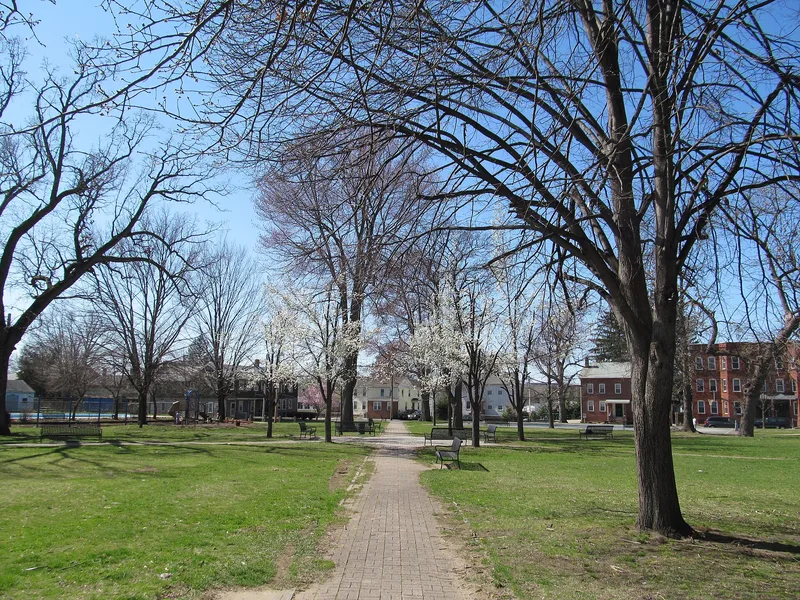
Cabotville Common Historic District is a six-block residential neighborhood in the center of Chicopee, Massachusetts, organized around a nearly two-acre park that has served as public open space since 1845. Its 54 contributing resources are mostly small wood-frame and brick houses built between about 1846 and 1910, along with a fraternal meeting hall from 1913. Greek Revival is the dominant style, often updated later with Italianate, Queen Anne or Colonial Revival details such as door hoods and porches. Unlike the mill-owned boarding houses to the north, lots here were sold to individuals who built homes for themselves or as rentals. Mason Charles McClallan built many of the early brick houses, recognizable by corbelled gable eaves and denticulated cornices. Residents were machinists, overseers and other skilled workers, and the area became Chicopee's largest Irish neighborhood, nicknamed "the Patch." The district preserves this modest, densely settled mill-era neighborhood.
Machine-generated summary. This summary was generated by a language model from the official nomination document and has not been reviewed line by line by an editor. It may contain errors. Check the source document before relying on any detail. Source: nomination document (PDF) · catalog entry. Generated October 2026 (model claude-sonnet-5-5, prompt v1.0-2026-10-29).
| Styles | Greek Revival; Italianate; Second Empire; Queen Anne; Colonial Revival; Classical Revival |
|---|---|
| Areas of significance | Architecture, Community Planning and Development, Entertainment/Recreation, Industry, Landscape Architecture |
| Acreage | 19 |
| Boundary source | NPS cultural-resource GIS polygon |
| Full listing page | Cabotville Common Historic District (property record) |
What listing means for this property
This is a historic district. Buildings within its boundary are either contributing (they add to the district's significance) or non-contributing. Owners of contributing income-producing buildings can claim the 20% federal rehabilitation tax credit; homeowners should look at state credits. National Register districts impose no design review by themselves; a local historic district ordinance, if one exists, does (the difference explained).
General information, not legal or tax advice. Rules change; confirm with your State Historic Preservation Office or a qualified adviser.