Brush Hill Historic District

Why it's listed
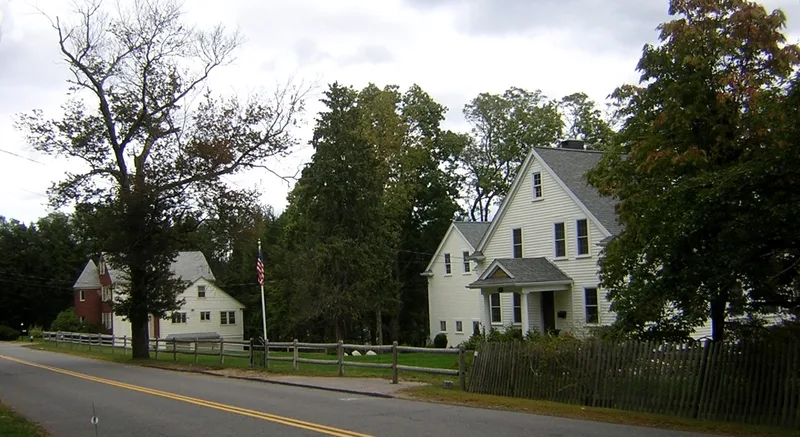
Brush Hill Historic District is a residential area in western Milton, Massachusetts, stretching about 0.8 miles along Brush Hill Road and including Fairmount Avenue and Brush Hill Lane. It lies on the southern slope of a 258-foot drumlin with views toward the Blue Hills. The district holds 66 resources, mostly wood-frame houses with barns, carriage houses and garages, set behind porphyry and fieldstone walls. Its oldest building is the Robert Tucker House, built about 1670 and moved within the district in 1895. Federal farmhouses, Greek Revival dwellings and later country estates follow, including the Charles White House of 1880, designed by George Russell Shaw. The buildings trace Milton's change from a small rural town to a prosperous Boston suburb, as farmland was divided into estates and later suburban lots. The area is also linked to old Milton families, including the Tuckers and Voses. Its period of significance runs from about 1670 to 1948.
Machine-generated summary. This summary was generated by a language model from the official nomination document and has not been reviewed line by line by an editor. It may contain errors. Check the source document before relying on any detail. Source: nomination document (PDF) · catalog entry. Generated October 2026 (model claude-sonnet-5-5, prompt v1.0-2026-10-29).
| Period of significance | c. 1670-1948 |
|---|---|
| Styles | Colonial: New England Colonial; Federal; Greek Revival; Italianate; Queen Anne; Colonial Revival; Tudor Revival; Craftsman |
| Areas of significance | Architecture, Agriculture, Community Planning and Development |
| Acreage | 68.5 |
| Boundary source | NPS cultural-resource GIS polygon |
| Full listing page | Brush Hill Historic District (property record) |
What listing means for this property
This is a historic district. Buildings within its boundary are either contributing (they add to the district's significance) or non-contributing. Owners of contributing income-producing buildings can claim the 20% federal rehabilitation tax credit; homeowners should look at state credits. National Register districts impose no design review by themselves; a local historic district ordinance, if one exists, does (the difference explained).
General information, not legal or tax advice. Rules change; confirm with your State Historic Preservation Office or a qualified adviser.