Boxborough Old Town Center

Why it's listed
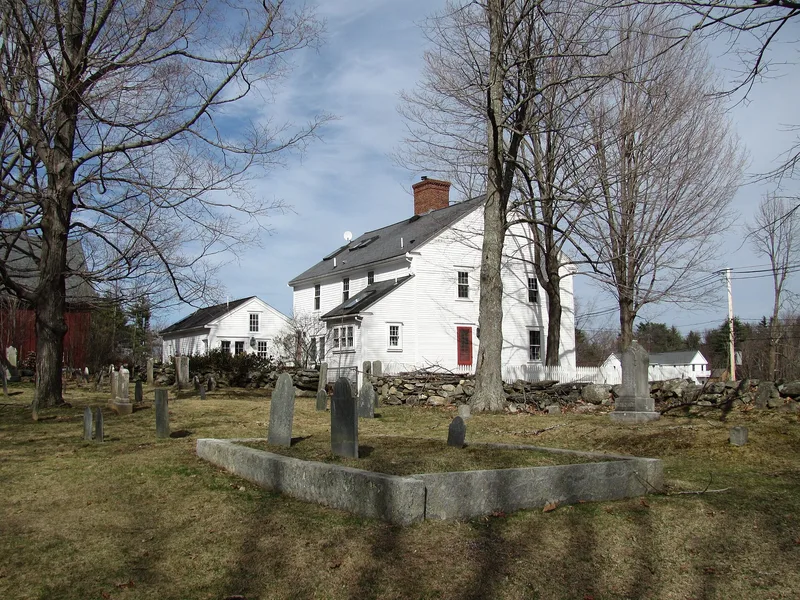
Boxborough Old Town Center is a linear village of about 100 acres on the highest hill in Boxborough, Massachusetts, strung along Hill Road. At its south end lie the remnant of the 1775 town common, the North Burying Ground with about 400 graves, and the granite foundation of the first meetinghouse, which burned in 1953. North of the common, farmhouses from the late 18th and early 19th centuries, including brick Federal residences, sit beside barns, stone walls, farm ponds, hay fields and old cart paths. Two small one-room schoolhouses, one used until 1949, add to the rural setting. The district matters because it holds the surviving institutional, commercial and residential heart of an agricultural town. Civic business was conducted here from 1783 until the Town Hall opened elsewhere in 1901. A well-known general store and meeting hall operated near the common in the early 19th century, and local craftsmen worked nearby. The district also contains the town's best collection of historic farm resources.
Machine-generated summary. This summary was generated by a language model from the official nomination document and has not been reviewed line by line by an editor. It may contain errors. Check the source document before relying on any detail. Source: nomination document (PDF) · catalog entry. Generated October 2026 (model claude-sonnet-5-5, prompt v1.0-2026-10-29).
| Styles | Georgian, Federal, mid-19th century, Late Victorian, and 20th-century Ranch and Cape Cod styles |
|---|---|
| Areas of significance | Architecture, Community Planning and Development |
| Acreage | 100 |
| Boundary source | NPS cultural-resource GIS polygon |
| Full listing page | Boxborough Old Town Center (property record) |
What listing means for this property
This is a historic district. Buildings within its boundary are either contributing (they add to the district's significance) or non-contributing. Owners of contributing income-producing buildings can claim the 20% federal rehabilitation tax credit; homeowners should look at state credits. National Register districts impose no design review by themselves; a local historic district ordinance, if one exists, does (the difference explained).
General information, not legal or tax advice. Rules change; confirm with your State Historic Preservation Office or a qualified adviser.