Boston Consumptives Hospital

Why it's listed
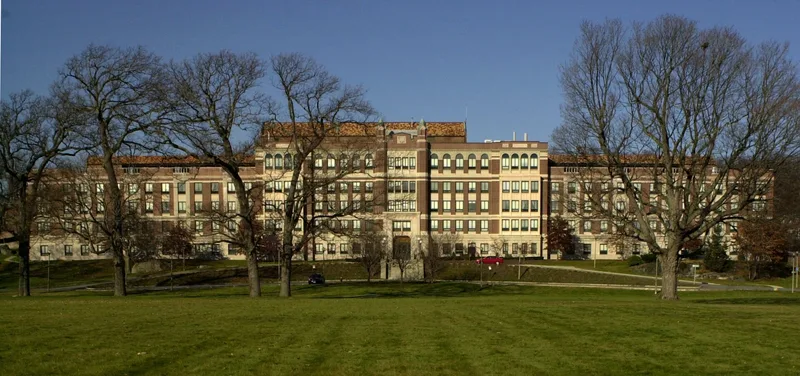
Set on a hillside in Boston's Mattapan neighborhood, this campus on River Street grew from a mid-19th century country property into the largest tuberculosis hospital in Massachusetts. The city opened it to patients in July 1908, when consumption was among the leading causes of death in Boston. Buildings were added over the following decades, including two-story concrete wards, small cottage wards for patients who could walk, open-air wards, a power house, a nurses home and a large administration building completed in 1929. Treatment relied on fresh air, rest and nourishing food, and the layouts show this through porches, balconies and open wards. The 19 surviving buildings represent Italianate, Craftsman, Art Deco and Revival styles, designed largely by Maginnis & Walsh and James H. Ritchie & Associates. Stone walls line most of the boundary. Several wards stand vacant and in poor condition, but the complex keeps its overall architectural integrity and its record of early public tuberculosis care.
Machine-generated summary. This summary was generated by a language model from the official nomination document and has not been reviewed line by line by an editor. It may contain errors. Check the source document before relying on any detail. Source: nomination document (PDF) · catalog entry. Generated October 2026 (model claude-sonnet-5-5, prompt v1.0-2026-10-29).
| Period of significance | 1856-1951 |
|---|---|
| Styles | Italianate, Craftsman, Art Deco, Neo-Classical, Colonial Revival and other Revival styles |
| Areas of significance | Architecture, Health/Medicine |
| Acreage | 52 |
| Boundary source | NPS cultural-resource GIS polygon |
| Full listing page | Boston Consumptives Hospital (property record) |
What listing means for this property
This is a historic district. Buildings within its boundary are either contributing (they add to the district's significance) or non-contributing. Owners of contributing income-producing buildings can claim the 20% federal rehabilitation tax credit; homeowners should look at state credits. National Register districts impose no design review by themselves; a local historic district ordinance, if one exists, does (the difference explained).
General information, not legal or tax advice. Rules change; confirm with your State Historic Preservation Office or a qualified adviser.