Blackinton Houses and Park

Why it's listed
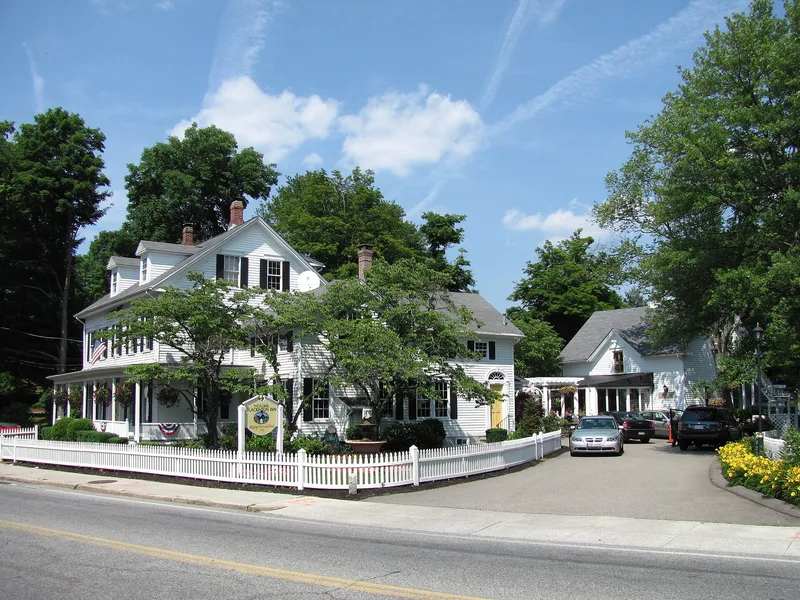
Blackinton Houses and Park is a small district beside the Bungay River and Blackinton Pond in Attleboro, Massachusetts. It includes the 1849 Greek Revival house of Col. Willard Blackinton, with a rear ell and large barn, and a nearby double house built shortly afterward for his sons Charles and John. A small public park, a stone memorial bridge and a flagpole complete the group. Blackinton founded a shuttle shop here in 1827 that made shuttles for power looms, driven by Attleboro's first water turbine on the pond; the original dam survives. He also served as a state legislator and bank president. His sons continued the shuttle business and later moved into cotton thread and jewelry manufacturing. The park was given to the city in 1937 by the family of the first mayor and dedicated to World War I veterans. The listing joins family architecture, early industry and twentieth century town planning.
Machine-generated summary. This summary was generated by a language model from the official nomination document and has not been reviewed line by line by an editor. It may contain errors. Check the source document before relying on any detail. Source: nomination document (PDF) · catalog entry. Generated October 2026 (model claude-sonnet-5-5, prompt v1.0-2026-10-29).
| Period of significance | 1800-1899 |
|---|---|
| Styles | Greek Revival (Col. Willard Blackinton House) |
| Areas of significance | Industry, Landscape Architecture, Politics/Government, Architecture |
| Acreage | 5.5 |
| Boundary source | NPS cultural-resource GIS polygon |
| Full listing page | Blackinton Houses and Park (property record) |
What listing means for this property
This is a historic district. Buildings within its boundary are either contributing (they add to the district's significance) or non-contributing. Owners of contributing income-producing buildings can claim the 20% federal rehabilitation tax credit; homeowners should look at state credits. National Register districts impose no design review by themselves; a local historic district ordinance, if one exists, does (the difference explained).
General information, not legal or tax advice. Rules change; confirm with your State Historic Preservation Office or a qualified adviser.