Bedford Center Historic District

Why it's listed
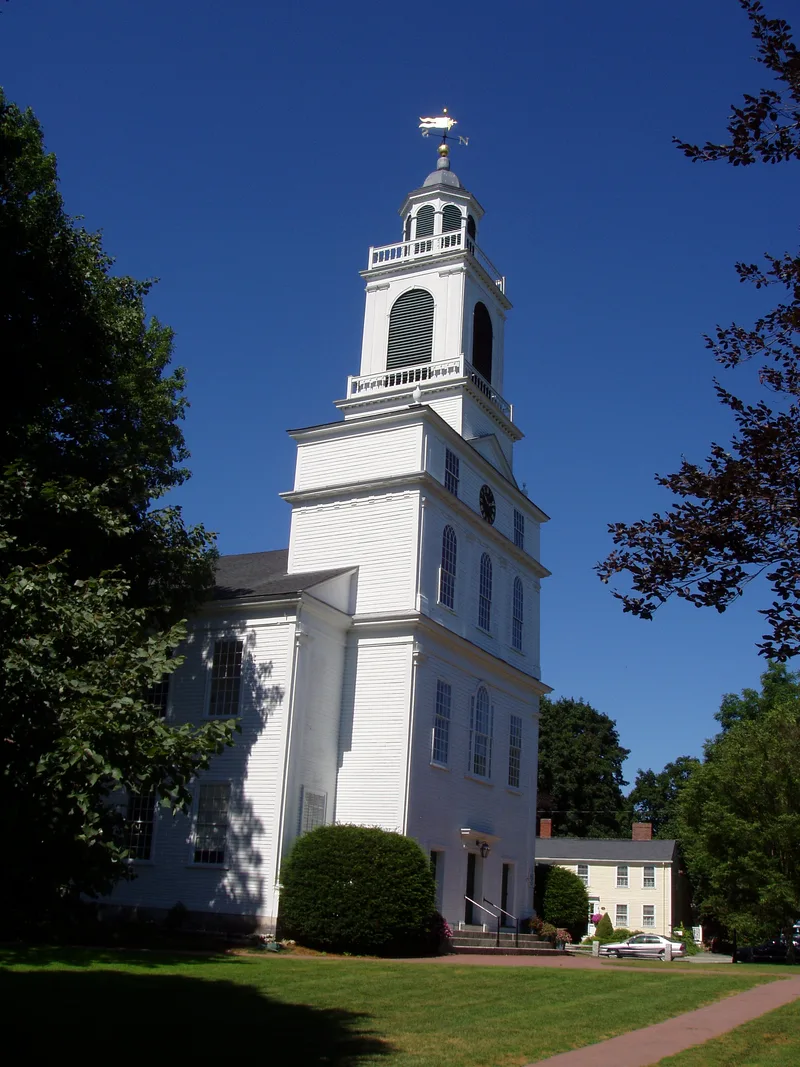
Bedford Center Historic District covers roughly 56 acres in the traditional heart of Bedford, Massachusetts. It contains about 100 commercial, religious, cultural and civic buildings, with construction beginning around 1710. Most were built in the 18th or early 19th century. Bedford was incorporated in 1729, and the district's buildings include Fitch Tavern, built about 1710 by Benjamin Kidder, and the Georgian Penniman-Stearns House of 1772 by local architect Reuben Duren. The Federal-style Squire Stearns House, the Greek Revival Jonathan Bacon House and the First Parish Church, modeled on a design by Asher Benjamin, add to the variety. The Old Burying Ground, the town hall and several early schoolhouses also lie within the boundaries, along with war memorials that stress the town's Revolutionary heritage. The area was listed because it remains the center of community life and offers a clear picture of rural New England development, with Colonial, Federal, Greek Revival and Victorian architecture in excellent condition. About 19 modern buildings are counted as intrusions, though most blend with their older neighbors.
Machine-generated summary. This summary was generated by a language model from the official nomination document and has not been reviewed line by line by an editor. It may contain errors. Check the source document before relying on any detail. Source: nomination document (PDF) · catalog entry. Generated October 2026 (model claude-sonnet-5-5, prompt v1.0-2026-10-29).
| Styles | Colonial, Georgian, Federal, Greek Revival and Victorian |
|---|---|
| Areas of significance | Industry, Architecture |
| Acreage | 56.2 |
| Boundary source | NPS cultural-resource GIS polygon |
| Full listing page | Bedford Center Historic District (property record) |
What listing means for this property
This is a historic district. Buildings within its boundary are either contributing (they add to the district's significance) or non-contributing. Owners of contributing income-producing buildings can claim the 20% federal rehabilitation tax credit; homeowners should look at state credits. National Register districts impose no design review by themselves; a local historic district ordinance, if one exists, does (the difference explained).
General information, not legal or tax advice. Rules change; confirm with your State Historic Preservation Office or a qualified adviser.