Barneyville Historic District

Why it's listed
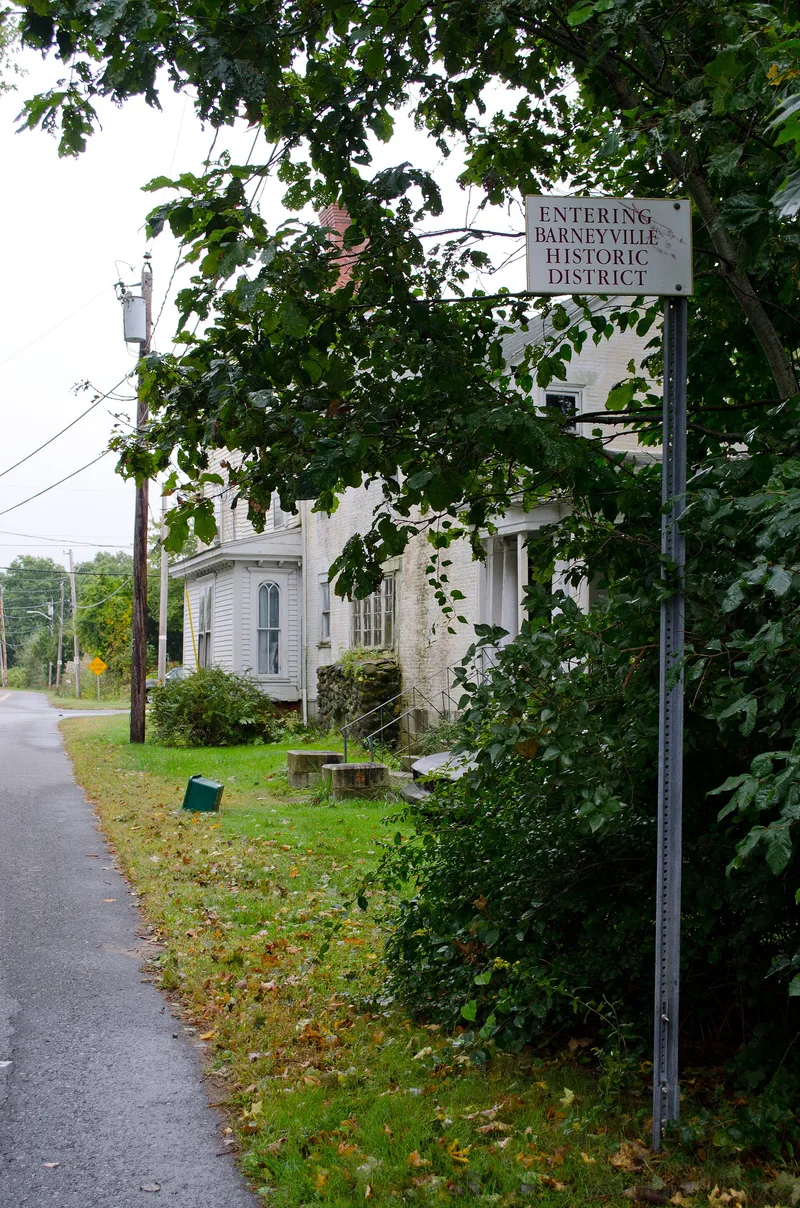
Barneyville is a small riverside village in northwestern Swansea, Massachusetts, where houses from about 1750 to the early 20th century line Old Providence and Barneyville Roads on both banks of the Palmer River. The district covers roughly 27 acres and includes 13 contributing and 16 noncontributing resources. Settlement began with the Rev. John Myles's garrisoned home, after 1663. The village took its name and identity from the Barney shipyard, begun by Jonathan Barney and expanded by his son Mason, whose yard launched 137 ships between 1803 and 1859. Jewelry manufacturing, started by Daniel R. Child, replaced shipbuilding until the early 1920s. Surviving buildings include Georgian, Federal, Greek Revival and Colonial Revival houses, among them the ca. 1750 Barney House and the Mason Barney House. A 1938 concrete bridge, site markers and a golf course also lie within the boundaries. The district keeps its rural character and is entirely residential today.
Machine-generated summary. This summary was generated by a language model from the official nomination document and has not been reviewed line by line by an editor. It may contain errors. Check the source document before relying on any detail. Source: nomination document (PDF) · catalog entry. Generated October 2026 (model claude-sonnet-5-5, prompt v1.0-2026-10-29).
| Period of significance | ca. 1750-1939 |
|---|---|
| Styles | Georgian, Federal, Greek Revival and Colonial Revival |
| Areas of significance | Community Planning and Development, Exploration/Settlement, Architecture |
| Acreage | 27 |
| Boundary source | NPS cultural-resource GIS polygon |
| Full listing page | Barneyville Historic District (property record) |
What listing means for this property
This is a historic district. Buildings within its boundary are either contributing (they add to the district's significance) or non-contributing. Owners of contributing income-producing buildings can claim the 20% federal rehabilitation tax credit; homeowners should look at state credits. National Register districts impose no design review by themselves; a local historic district ordinance, if one exists, does (the difference explained).
General information, not legal or tax advice. Rules change; confirm with your State Historic Preservation Office or a qualified adviser.