Ayer Main Street Historic District

Why it's listed
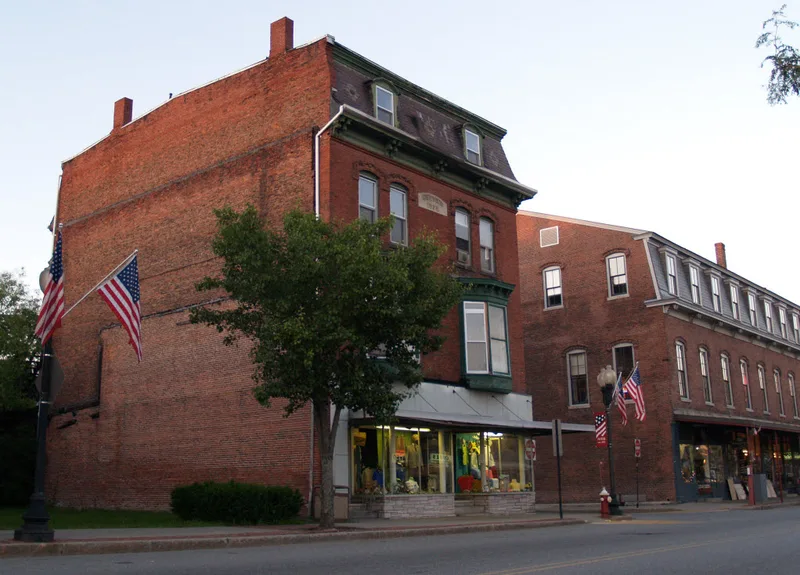
Main Street in Ayer, Massachusetts, is a compact commercial district of about eight acres that grew up around a railroad crossing. Before the 1840s the area was farmland, but the arrival of four rail lines at what was called Groton Junction turned it into a commercial center. A fire in 1872 destroyed the wooden business district, and by 1898 most of the brick blocks seen today had been built in High Victorian Gothic, Second Empire, Italianate and Neo-Classical styles. They include Page's Block, Mead's Block, the Nutting Block, the 1876 Town Hall and the 1898 North Middlesex Savings Bank. A second phase of building on the south side of Main Street began in 1914 and added commercial blocks and later roadside structures tied to Routes 2A and 111. The district has 12 contributing buildings. Its significance rests on its ties to commerce, transportation and commercial architecture between 1848 and 1938.
Machine-generated summary. This summary was generated by a language model from the official nomination document and has not been reviewed line by line by an editor. It may contain errors. Check the source document before relying on any detail. Source: nomination document (PDF) · catalog entry. Generated October 2026 (model claude-sonnet-5-5, prompt v1.0-2026-10-29).
| Period of significance | 1848-1938 |
|---|---|
| Styles | Mid-19th-Century Vernacular, Second Empire, Italianate |
| Areas of significance | Commerce, Architecture |
| Acreage | 5.5 |
| Boundary source | NPS cultural-resource GIS polygon |
| Full listing page | Ayer Main Street Historic District (property record) |
What listing means for this property
This is a historic district. Buildings within its boundary are either contributing (they add to the district's significance) or non-contributing. Owners of contributing income-producing buildings can claim the 20% federal rehabilitation tax credit; homeowners should look at state credits. National Register districts impose no design review by themselves; a local historic district ordinance, if one exists, does (the difference explained).
General information, not legal or tax advice. Rules change; confirm with your State Historic Preservation Office or a qualified adviser.