Ashfield Plain Historic District

Why it's listed
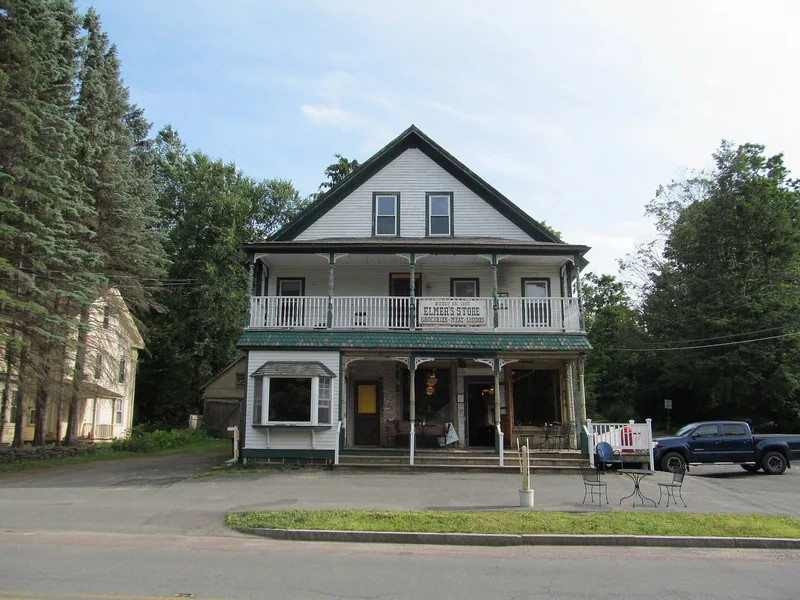
Ashfield Plain Historic District covers the old village center of Ashfield, Massachusetts, a hill town in the Berkshire foothills at about 1,250 feet. Laid out mainly along Main Street, the 133-acre district holds roughly 125 contributing buildings, structures and objects dating from about 1766 to 1939. Most are wood-frame houses of one to two stories, and Federal and Greek Revival designs predominate. Notable landmarks include the Town Hall, built as a meetinghouse in 1812-1814 and closely modelled on an Asher Benjamin plate, and St. John's Episcopal Church of 1827 by local builder Jonathan Lilly. The marble Belding Memorial Library of 1914 is the only stone building. The village grew around taverns, stores, an academy and a stage-route hotel, and Sanderson Academy counted Mary Lyon among its early students. Local peppermint production was once a notable industry. Later summer residents added Queen Anne and Colonial Revival touches, and the district remains largely intact.
Machine-generated summary. This summary was generated by a language model from the official nomination document and has not been reviewed line by line by an editor. It may contain errors. Check the source document before relying on any detail. Source: nomination document (PDF) · catalog entry. Generated October 2026 (model claude-sonnet-5-5, prompt v1.0-2026-10-29).
| Styles | Federal, Greek Revival, Gothic Revival, Italianate, Queen Anne, Stick-Eastlake, Colonial Revival |
|---|---|
| Areas of significance | Industry, Community Planning and Development, Commerce, Agriculture, Education, Architecture |
| Acreage | 133 |
| Boundary source | NPS cultural-resource GIS polygon |
| Full listing page | Ashfield Plain Historic District (property record) |
What listing means for this property
This is a historic district. Buildings within its boundary are either contributing (they add to the district's significance) or non-contributing. Owners of contributing income-producing buildings can claim the 20% federal rehabilitation tax credit; homeowners should look at state credits. National Register districts impose no design review by themselves; a local historic district ordinance, if one exists, does (the difference explained).
General information, not legal or tax advice. Rules change; confirm with your State Historic Preservation Office or a qualified adviser.