Ames Hill/Crescent Hill District

Why it's listed
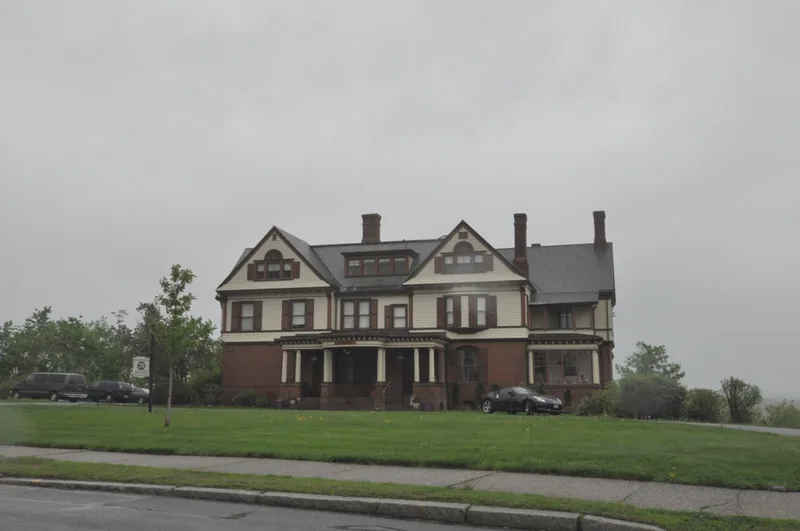
Ames Hill and Crescent Hill form a wooded, heavily landscaped residential enclave on two adjoining hills southwest of downtown Springfield, Massachusetts. Roughly 21 acres along Maple, Central, Mill and Pine Streets and Crescent Hill hold some thirty large houses built between 1826 and 1930. Paper manufacturer David Ames, Sr. opened this section of Maple Street in 1812 to reach his mill on the Mill River, and later commissioned a wedding house here for his son. Industrialists, bankers, lawyers and merchants then built homes in styles ranging from Italianate and Stick Style to Queen Anne, Shingle Style, Colonial Revival and Tudor. Notable examples include the Walter Wesson House of 1882 and the Julius Appleton House of 1886. Local builders Chauncey Shepard and Simon Sanborn, architect Henry Sykes and designers Eugene Gardner and Max Westhoff worked here. The district was listed for having one of Springfield's finest groupings of domestic architecture.
Machine-generated summary. This summary was generated by a language model from the official nomination document and has not been reviewed line by line by an editor. It may contain errors. Check the source document before relying on any detail. Source: nomination document (PDF) · catalog entry. Generated October 2026 (model claude-sonnet-5-5, prompt v1.0-2026-10-29).
| Styles | Varied: Italianate, Federal-Greek Revival, Stick Style, Queen Anne, Shingle Style, Colonial Revival, Tudor, Georgian Revival, Chateauesque, English Cottage |
|---|---|
| Areas of significance | Industry, Commerce, Architecture |
| Acreage | 21 |
| Boundary source | NPS cultural-resource GIS polygon |
| Full listing page | Ames Hill/Crescent Hill District (property record) |
What listing means for this property
This is a historic district. Buildings within its boundary are either contributing (they add to the district's significance) or non-contributing. Owners of contributing income-producing buildings can claim the 20% federal rehabilitation tax credit; homeowners should look at state credits. National Register districts impose no design review by themselves; a local historic district ordinance, if one exists, does (the difference explained).
General information, not legal or tax advice. Rules change; confirm with your State Historic Preservation Office or a qualified adviser.