West Chatham Bungalow Historic District

The National Park Service has not published a boundary polygon for this district; the map shows the listed properties inside it and the district's reference point.
Why it's listed
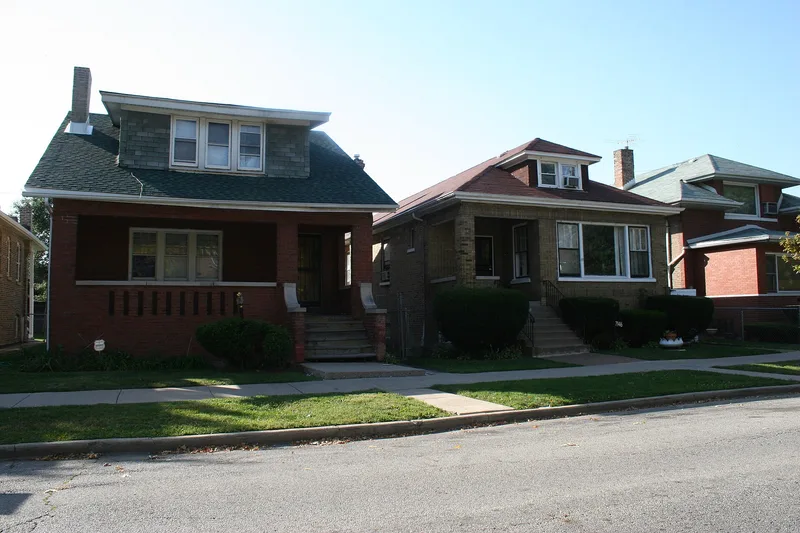
West Chatham Bungalow Historic District is a quiet, tree-lined residential area on Chicago's South Side, about ten miles south of the Loop. It holds 347 buildings, most of them brick Chicago bungalows built between 1914 and 1930, along with two-flats, a school and a 1950s church. Much of the area was swampy and sparsely built until the 1920s, and about a third of the bungalows went up in 1925 alone. Ernest Braucher designed more than 80 of them, many in partnership with developer Joseph B. Serrin, while F. A. Fielder gave Yale Avenue its Art Deco facades. The houses share low hipped roofs, overhanging eaves, decorative brickwork and limestone trim, and they sit at consistent setbacks on narrow lots. Of the total, 289 buildings retain enough original character to contribute. The district is significant as an example of the affordable single-family housing that served Chicago's growing middle class and immigrant families during the early twentieth century.
Machine-generated summary. This summary was generated by a language model from the official nomination document and has not been reviewed line by line by an editor. It may contain errors. Check the source document before relying on any detail. Source: nomination document (PDF) · catalog entry. Generated October 2026 (model claude-sonnet-5-5, prompt v1.0-2026-10-29).
| Period of significance | 1913-1930 |
|---|---|
| Styles | Other: Chicago Bungalow/Craftsman |
| Boundary source | not published |
| Full listing page | West Chatham Bungalow Historic District (property record) |
What listing means for this property
This is a historic district. Buildings within its boundary are either contributing (they add to the district's significance) or non-contributing. Owners of contributing income-producing buildings can claim the 20% federal rehabilitation tax credit; homeowners should look at state credits. National Register districts impose no design review by themselves; a local historic district ordinance, if one exists, does (the difference explained).
General information, not legal or tax advice. Rules change; confirm with your State Historic Preservation Office or a qualified adviser.