Warsaw Historic District

Why it's listed
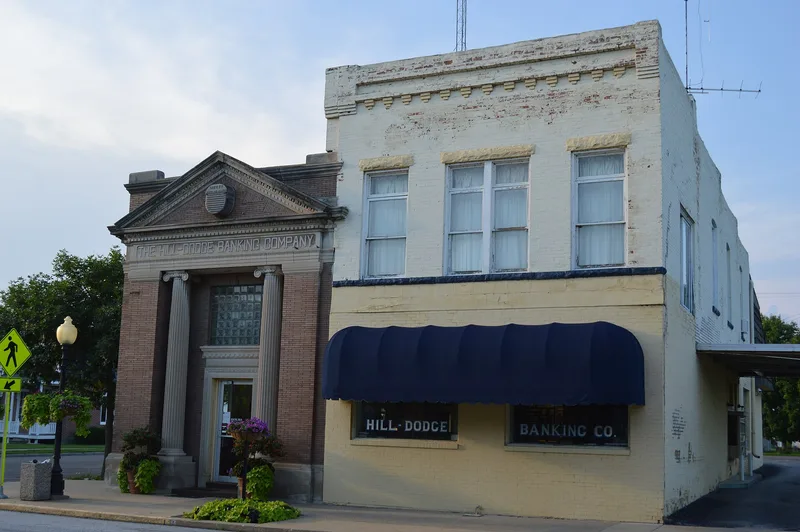
Warsaw sits on 80-to-100-foot bluffs above the Mississippi River, opposite the mouth of the Des Moines River, and is the westernmost incorporated place in Illinois. The historic district takes in most of the city's built-up core, about 265 acres with 381 major structures. Main Street forms a nearly continuous masonry front, while detached houses, mostly masonry, fill the residential blocks. The earliest dated buildings are from 1835 and are in a simplified Federal style, followed by Greek Revival and Italianate work. Three early twentieth-century houses by architect Ernest M. Wood reflect Prairie School influence. Warsaw grew rapidly as a river port and manufacturing town, but its growth ended around 1870 as river traffic declined and no major railroad arrived. That stalled growth left many nineteenth-century buildings standing. The city also figured in the conflict with the Mormons at Nauvoo, since the Warsaw Signal led attacks that preceded the Mormons' move to Utah.
Machine-generated summary. This summary was generated by a language model from the official nomination document and has not been reviewed line by line by an editor. It may contain errors. Check the source document before relying on any detail. Source: nomination document (PDF) · catalog entry. Generated October 2026 (model claude-sonnet-5-5, prompt v1.0-2026-10-29).
| Period of significance | 1800-1899 |
|---|---|
| Styles | Federal, Greek Revival, Italianate, with some Gothic, Stick, Queen Anne and Prairie School |
| Areas of significance | Architecture |
| Acreage | 265 |
| Boundary source | NPS cultural-resource GIS polygon |
| Full listing page | Warsaw Historic District (property record) |
What listing means for this property
This is a historic district. Buildings within its boundary are either contributing (they add to the district's significance) or non-contributing. Owners of contributing income-producing buildings can claim the 20% federal rehabilitation tax credit; homeowners should look at state credits. National Register districts impose no design review by themselves; a local historic district ordinance, if one exists, does (the difference explained).
General information, not legal or tax advice. Rules change; confirm with your State Historic Preservation Office or a qualified adviser.