Taylorville Courthouse Square Historic District

Why it's listed
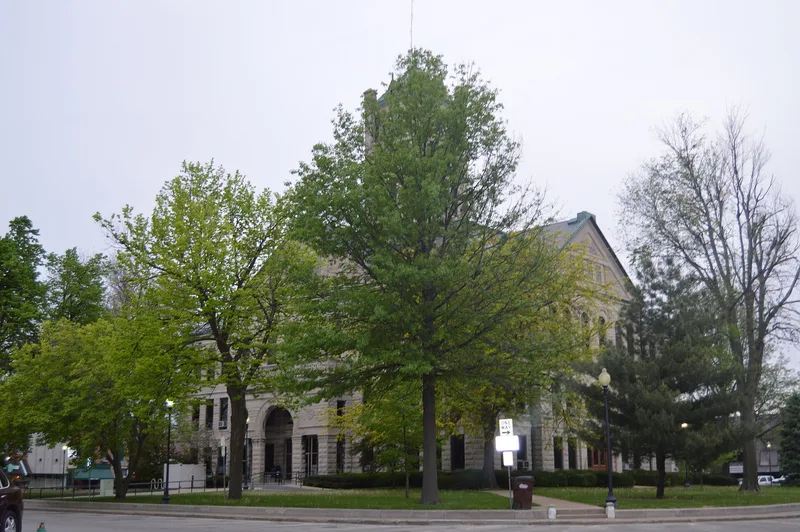
Taylorville's courthouse square and the surrounding central business district form a compact historic district of 84 buildings, 67 of them contributing. At its center stands the three-story, rock-faced limestone Romanesque Revival courthouse, built in 1902 with a 40-foot clock tower. Around it are two and three story brick commercial buildings in Italianate, Queen Anne, Romanesque Revival, Prairie School-related and Moderne styles, along with a 1904 Mission Style library, a 1917 post office and a few frame houses. The county seat began with a small frame building in 1839, and growth quickened after a railroad arrived in 1869. Most surviving buildings date from 1875 to 1930, the period of significance. Many storefronts have been altered, yet upper-floor windows and cornices often remain. The square has no missing buildings in its street faces, and its 80-foot-wide streets give the courthouse a strong setting. Upper floors are often empty and deteriorating.
Machine-generated summary. This summary was generated by a language model from the official nomination document and has not been reviewed line by line by an editor. It may contain errors. Check the source document before relying on any detail. Source: nomination document (PDF) · catalog entry. Generated October 2026 (model claude-sonnet-5-5, prompt v1.0-2026-10-29).
| Period of significance | 1875-1930 |
|---|---|
| Styles | Italianate, Romanesque Revival, Beaux Arts Classicism, Spanish Colonial Revival, Mission, Queen Anne, Moderne and Prairie School-related styles |
| Areas of significance | Commerce, Politics/Government, Architecture |
| Acreage | 19.7 |
| Boundary source | NPS cultural-resource GIS polygon |
| Full listing page | Taylorville Courthouse Square Historic District (property record) |
What listing means for this property
This is a historic district. Buildings within its boundary are either contributing (they add to the district's significance) or non-contributing. Owners of contributing income-producing buildings can claim the 20% federal rehabilitation tax credit; homeowners should look at state credits. National Register districts impose no design review by themselves; a local historic district ordinance, if one exists, does (the difference explained).
General information, not legal or tax advice. Rules change; confirm with your State Historic Preservation Office or a qualified adviser.