Spring-Douglas Historic District

Why it's listed
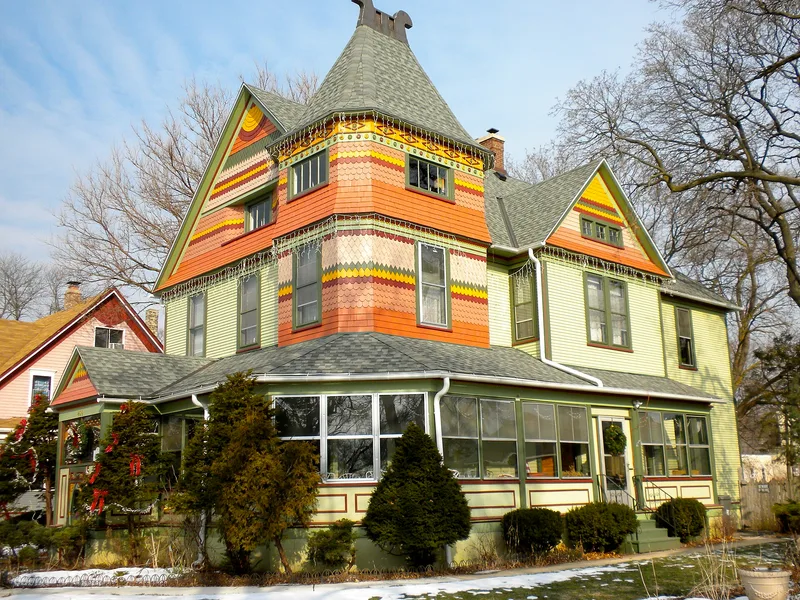
Spring Street and Douglas Avenue in Elgin's Northeast Neighborhood form a residential district of 285 principal buildings and 211 secondary structures, mostly built between 1850 and 1950. The district lies east of the Fox River and north of downtown, running from Kimball Street to the river bluff at River Bluff Road. Its houses trace the city's northward growth: pre-Civil War Greek Revival and Italianate homes at the south end, Stick, Queen Anne and Shingle Style houses from the boom years before 1900, and Colonial Revival, Tudor, Craftsman and Prairie designs farther north. A street car line opened on Douglas Avenue in 1881, and subdivisions for factory workers and local leaders spurred most construction between the 1880s and 1930s. Prominent Elgin architects designed some houses. Although siding and porch changes have affected some buildings, many keep their original detailing, and recent rehabilitation has strengthened the district's historic character. Elgin's industrial growth is reflected in the housing.
Machine-generated summary. This summary was generated by a language model from the official nomination document and has not been reviewed line by line by an editor. It may contain errors. Check the source document before relying on any detail. Source: nomination document (PDF) · catalog entry. Generated October 2026 (model claude-sonnet-5-5, prompt v1.0-2026-10-29).
| Period of significance | 1850-1950 |
|---|---|
| Styles | Bungalow/Craftsman, Classical Revival, Colonial Revival, Italianate, Mission/Spanish Colonial Revival, Prairie School, Queen Anne, Shingle Style, Stick/Eastlake, Tudor Revival |
| Areas of significance | Architecture |
| Acreage | 93.7 |
| Boundary source | NPS cultural-resource GIS polygon |
| Full listing page | Spring-Douglas Historic District (property record) |
What listing means for this property
This is a historic district. Buildings within its boundary are either contributing (they add to the district's significance) or non-contributing. Owners of contributing income-producing buildings can claim the 20% federal rehabilitation tax credit; homeowners should look at state credits. National Register districts impose no design review by themselves; a local historic district ordinance, if one exists, does (the difference explained).
General information, not legal or tax advice. Rules change; confirm with your State Historic Preservation Office or a qualified adviser.