Sherman Park

Why it's listed
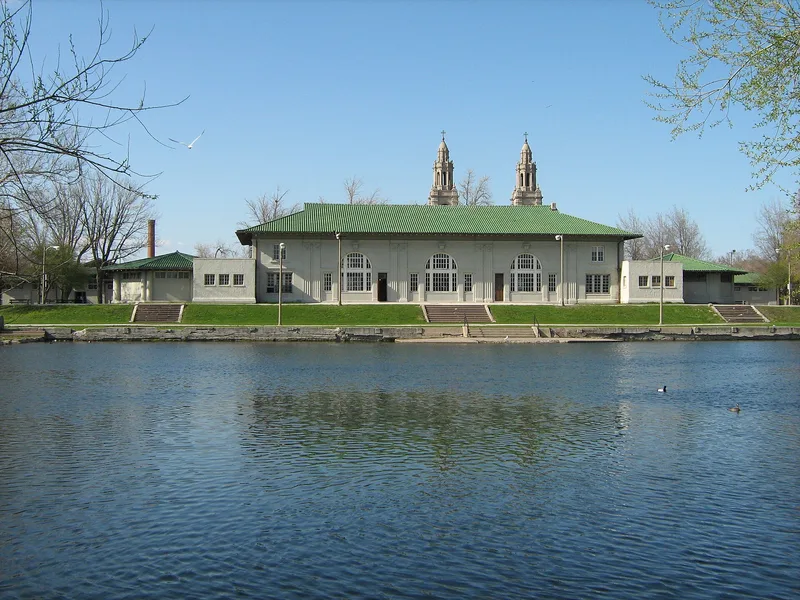
Sherman Park is a 60.6-acre public park on Chicago's South Side, laid out between 1904 and 1907 as one of the South Park Commission's first neighborhood parks. The site was low, swampy ground near the stockyards. The Olmsted Brothers reshaped it into rolling earthworks, a lagoon and islands, with an informal landscape across the southern two-thirds. The northern third is formal and holds the recreation buildings designed by Edward Bennett of D.H. Burnham and Company. These include men's and women's gymnasiums, locker buildings and a fieldhouse built of cast "marblecrete" with Palladian openings and terra cotta details. The park was listed for its role in the Progressive Reform movement, which brought playgrounds, bathing facilities, athletic space and a library into working neighborhoods, and for the collaboration between the two design firms. Later changes include the loss of pergolas and the original office building, replacement of roofing, and added playgrounds and courts, but the overall design remains legible.
Machine-generated summary. This summary was generated by a language model from the official nomination document and has not been reviewed line by line by an editor. It may contain errors. Check the source document before relying on any detail. Source: nomination document (PDF) · catalog entry. Generated October 2026 (model claude-sonnet-5-5, prompt v1.0-2026-10-29).
| Period of significance | 1904-07 |
|---|---|
| Styles | Late 19th and 20th Century Revivals/ Beaux Arts Classicism |
| Areas of significance | Landscape Architecture, Entertainment/Recreation, Architecture, Social History |
| Acreage | 60.6 |
| Boundary source | NPS cultural-resource GIS polygon |
| Full listing page | Sherman Park (property record) |
What listing means for this property
This is a historic district. Buildings within its boundary are either contributing (they add to the district's significance) or non-contributing. Owners of contributing income-producing buildings can claim the 20% federal rehabilitation tax credit; homeowners should look at state credits. National Register districts impose no design review by themselves; a local historic district ordinance, if one exists, does (the difference explained).
General information, not legal or tax advice. Rules change; confirm with your State Historic Preservation Office or a qualified adviser.