Riverview Historic District

Why it's listed
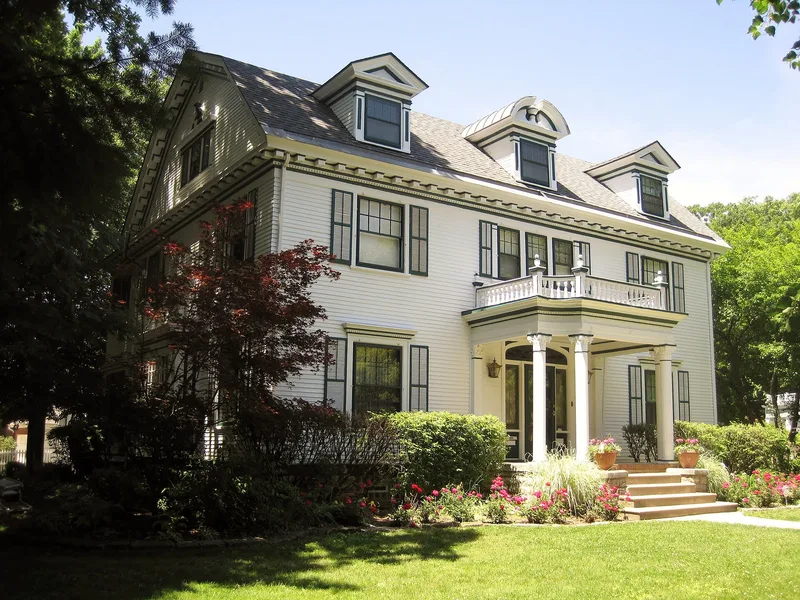
Riverview is a triangular neighborhood in Kankakee, Illinois, set between the Kankakee River, Wildwood Avenue, and River and Eagle Streets. The land was originally swampy lowland, later used as pasture and as the site of a resort hotel from 1887 to 1897. After the hotel burned, lots were sold for housing. Emory Cobb controlled most of the land until 1910, and Louis Beckman then continued residential development. Of 164 structures, 52 were rated significant, 120 contributing and 44 non-contributing. The district is best known for two early Prairie style houses by Frank Lloyd Wright, the Warren Hickox House of 1900 and the B. Harley Bradley House of 1901, along with the Charles Swannell House by Tallmadge and Watson. Queen Anne, Shingle, Colonial Revival, Craftsman, Mission and Tudor styles also appear. Generous setbacks, mature oaks, the river and Cobb Park give the area a cohesive character, with few alterations since development ended in the 1930s.
Machine-generated summary. This summary was generated by a language model from the official nomination document and has not been reviewed line by line by an editor. It may contain errors. Check the source document before relying on any detail. Source: nomination document (PDF) · catalog entry. Generated October 2026 (model claude-sonnet-5-5, prompt v1.0-2026-10-29).
| Styles | Prairie, Queen Anne, Shingle, Colonial Revival, Craftsman, Mission, Tudor Revival |
|---|---|
| Areas of significance | Architecture, Social History |
| Acreage | 78.2 |
| Boundary source | NPS cultural-resource GIS polygon |
| Full listing page | Riverview Historic District (property record) |
What listing means for this property
This is a historic district. Buildings within its boundary are either contributing (they add to the district's significance) or non-contributing. Owners of contributing income-producing buildings can claim the 20% federal rehabilitation tax credit; homeowners should look at state credits. National Register districts impose no design review by themselves; a local historic district ordinance, if one exists, does (the difference explained).
General information, not legal or tax advice. Rules change; confirm with your State Historic Preservation Office or a qualified adviser.