Ridgeland-Oak Park Historic District

Why it's listed
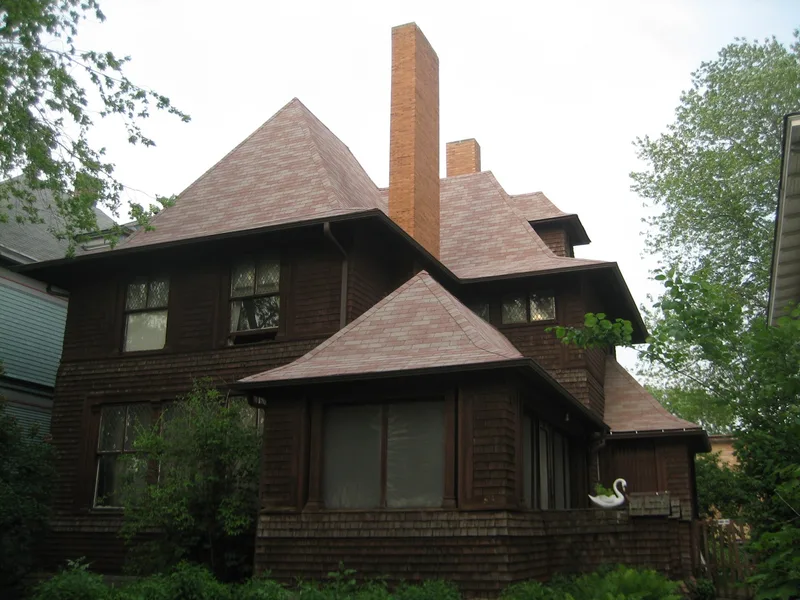
Oak Park's Ridgeland district covers 539 acres west of Chicago, on a flat glacial plain nine miles from Lake Michigan. Its 1,653 buildings, mostly houses, were built between the 1870s and 1920s after artesian wells, railroads and Chicago's growth made the area a major residential suburb. Wood-frame Gothic Revival, Italianate and Queen Anne houses from the nineteenth century give way to simpler, boxier early twentieth-century designs, a change the district shows clearly. The Farson House by Maher, the largest and costliest residence, helped set that direction. Architect Eben E. Roberts promoted stucco, and developers built rows of similar stucco houses and bungalows that gave streets a new unity. Wide parkway lawns and a grid of streets shape the setting, and brick apartment buildings of two to four stories line the busier streets around quiet single-family areas. Churches and commercial buildings range from Romanesque to Prairie School. A 2002 amendment later corrected the counts to 1,558 contributing and 147 noncontributing buildings.
Machine-generated summary. This summary was generated by a language model from the official nomination document and has not been reviewed line by line by an editor. It may contain errors. Check the source document before relying on any detail. Source: nomination document (PDF) · catalog entry. Generated October 2026 (model claude-sonnet-5-5, prompt v1.0-2026-10-29).
| Styles | Wide range from Gothic Revival, Italianate and Queen Anne to Prairie School, stucco and bungalow types; Romanesque to Prairie School in religious and commercial buildings |
|---|---|
| Areas of significance | Community Planning and Development, Landscape Architecture, Architecture |
| Acreage | 539 |
| Boundary source | NPS cultural-resource GIS polygon |
| Full listing page | Ridgeland-Oak Park Historic District (property record) |
What listing means for this property
This is a historic district. Buildings within its boundary are either contributing (they add to the district's significance) or non-contributing. Owners of contributing income-producing buildings can claim the 20% federal rehabilitation tax credit; homeowners should look at state credits. National Register districts impose no design review by themselves; a local historic district ordinance, if one exists, does (the difference explained).
General information, not legal or tax advice. Rules change; confirm with your State Historic Preservation Office or a qualified adviser.