Rainey, Henry T., Farm

Why it's listed
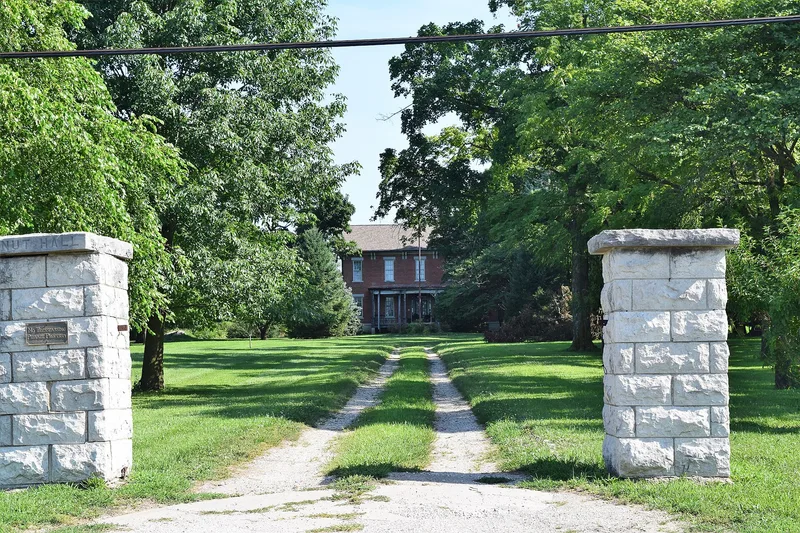
Walnut Hall and its surrounding 425-acre farm lie just east of Carrollton, Illinois. The two-story red brick house, built in 1868-70 for early settler Luman Curtius, combines Greek Revival doorways and windows with Italianate bracketed cornices and long verandas. Henry T. Rainey bought the farm in 1909 and ran it as a stockfeeder and later dairy operation while serving in Congress from 1903 to 1934, ending as Speaker of the House. The farm became a demonstration site for scientific agriculture, working with the University of Illinois on wheat varieties and soil fertility, and it encouraged farmer self-help through the Greene County Farm Bureau. Rainey also added recreational grounds that are now mostly gone. Surviving buildings include a tile dairy barn and silo, a corn crib, an older shed, and a rental house. The property was listed for its link to Rainey's agricultural leadership and for the farmhouse's architecture.
Machine-generated summary. This summary was generated by a language model from the official nomination document and has not been reviewed line by line by an editor. It may contain errors. Check the source document before relying on any detail. Source: nomination document (PDF) · catalog entry. Generated October 2026 (model claude-sonnet-5-5, prompt v1.0-2026-10-29).
| Period of significance | 1868-70; 1909-1934 |
|---|---|
| Styles | Greek Revival and Italianate |
| Areas of significance | Agriculture, Politics/Government, Architecture |
| Acreage | 425 |
| Boundary source | NPS cultural-resource GIS polygon |
| Full listing page | Rainey, Henry T., Farm (property record) |
What listing means for this property
This is a historic district. Buildings within its boundary are either contributing (they add to the district's significance) or non-contributing. Owners of contributing income-producing buildings can claim the 20% federal rehabilitation tax credit; homeowners should look at state credits. National Register districts impose no design review by themselves; a local historic district ordinance, if one exists, does (the difference explained).
General information, not legal or tax advice. Rules change; confirm with your State Historic Preservation Office or a qualified adviser.