Pacesetter Gardens Historic District

Why it's listed
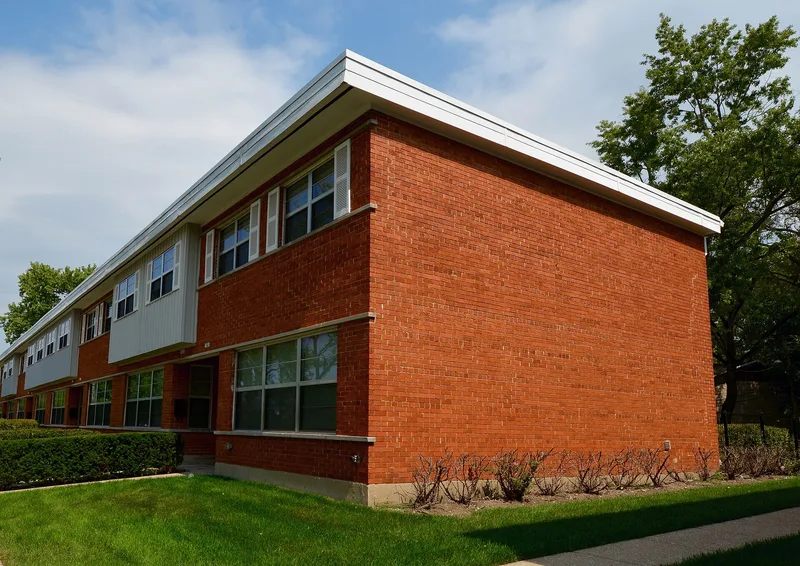
Pacesetter Gardens is a group of twelve flat-roofed, light-red brick town house buildings along South Lowe Avenue in Riverdale, Illinois, about fifteen miles south of downtown Chicago. Architect and developer Harry J. Quinn designed and built them in 1960. Together they hold ninety two-story units, each roughly twenty feet wide, with recessed entry alcoves, continuous horizontal stone courses, white aluminum cornices and box bays on the upper floors. Interiors were compact and economical, about 1,200 square feet with three bedrooms. The district matters because Riverdale had been dominated by detached single-family houses with pitched roofs. Quinn's town houses lowered costs by sharing walls and trimming interior space, which opened homeownership to families of more modest means. A national building journal featured the project in 1961 as part of an emerging town house trend. The buildings keep their original character and setting, and they are recognized for their social history, community planning and architecture.
Machine-generated summary. This summary was generated by a language model from the official nomination document and has not been reviewed line by line by an editor. It may contain errors. Check the source document before relying on any detail. Source: nomination document (PDF) · catalog entry. Generated October 2026 (model claude-sonnet-5-5, prompt v1.0-2026-10-29).
| Period of significance | 1960 |
|---|---|
| Styles | Modern movement; Other: Townhouses |
| Areas of significance | Social History, Community Planning and Development, Architecture |
| Acreage | 7.3 |
| Boundary source | NPS cultural-resource GIS polygon |
| Full listing page | Pacesetter Gardens Historic District (property record) |
What listing means for this property
This is a historic district. Buildings within its boundary are either contributing (they add to the district's significance) or non-contributing. Owners of contributing income-producing buildings can claim the 20% federal rehabilitation tax credit; homeowners should look at state credits. National Register districts impose no design review by themselves; a local historic district ordinance, if one exists, does (the difference explained).
General information, not legal or tax advice. Rules change; confirm with your State Historic Preservation Office or a qualified adviser.