Oaklawn Farm

Why it's listed
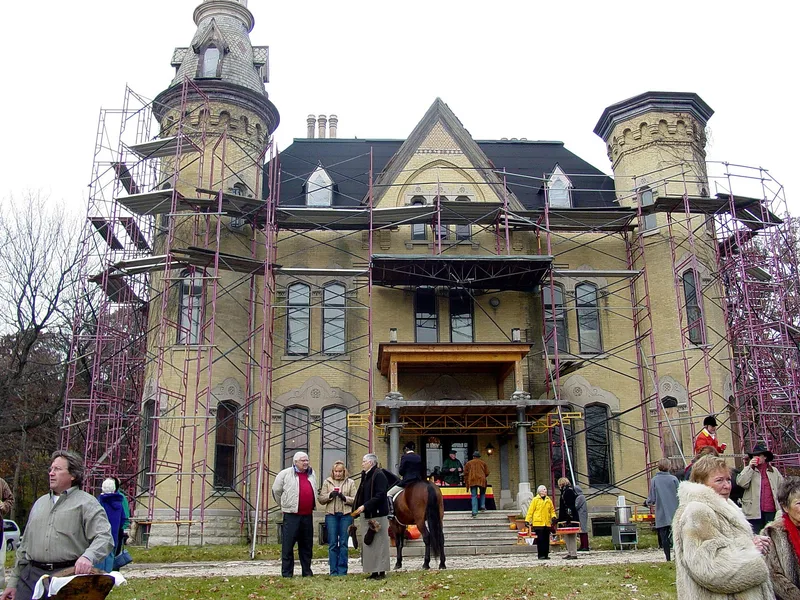
Oaklawn Farm Historic District occupies the four corners of Army Trail and Dunham roads in Wayne, in eastern Kane County. It preserves eleven structures from a farm that once covered more than 1,700 acres and specialized in importing and breeding Percheron draft horses. Mark Dunham, who took over his father's 300-acre homestead in the 1860s, built the operation into one of the largest of its kind, importing well over 2,000 horses from France by 1888. The surviving buildings include a long horse barn dating before 1884, other barns and outbuildings, the brick Solomon Dunham House of 1836, and a frame cottage from about 1875-80. Overlooking them is Dunham Castle, built in 1880-83 of pressed brick with towers and ornate detailing, which blends several late-19th-century styles. Farm operations ended in 1929, and since 1935 the Dunham Woods Riding Club has used much of the farm complex, keeping its barns in service.
Machine-generated summary. This summary was generated by a language model from the official nomination document and has not been reviewed line by line by an editor. It may contain errors. Check the source document before relying on any detail. Source: nomination document (PDF) · catalog entry. Generated October 2026 (model claude-sonnet-5-5, prompt v1.0-2026-10-29).
| Period of significance | 1800-1899 (the form also marks 1900-1929 on one version) |
|---|---|
| Styles | Dunham Castle described as mixed Parvenu and proto-Chateauesque; Solomon Dunham House in simplified Greek Revival; Italianate details on the horse barn |
| Areas of significance | Agriculture, Architecture |
| Acreage | 56 |
| Boundary source | NPS cultural-resource GIS polygon |
| Full listing page | Oaklawn Farm (property record) |
What listing means for this property
This is a historic district. Buildings within its boundary are either contributing (they add to the district's significance) or non-contributing. Owners of contributing income-producing buildings can claim the 20% federal rehabilitation tax credit; homeowners should look at state credits. National Register districts impose no design review by themselves; a local historic district ordinance, if one exists, does (the difference explained).
General information, not legal or tax advice. Rules change; confirm with your State Historic Preservation Office or a qualified adviser.