Oak Circle Historic District

The National Park Service has not published a boundary polygon for this district; the map shows the listed properties inside it and the district's reference point.
Why it's listed
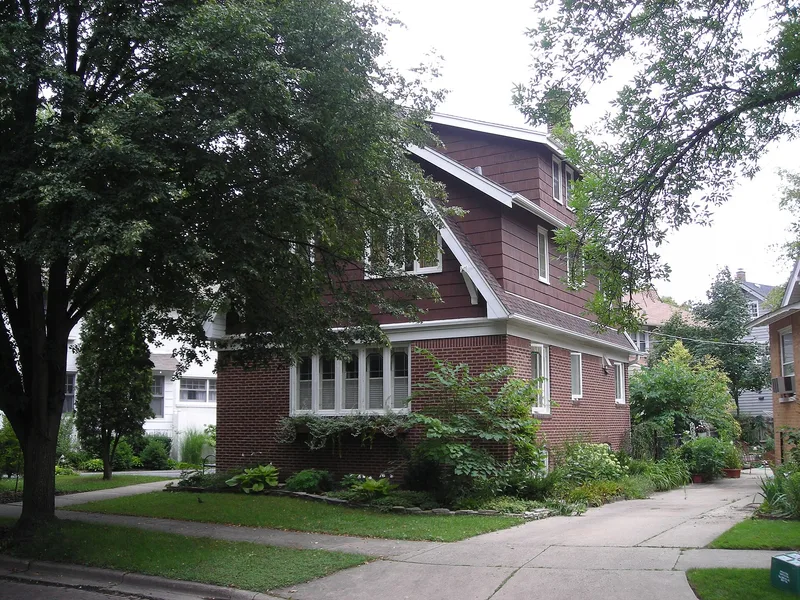
Oak Circle is a short, curving, brick-paved street in Wilmette, Illinois, lined with fifteen houses and eleven garages built between about 1919 and the mid-1920s. Twelve of the houses are bungalows, and the rest show Craftsman influence, often with Prairie-style details. Common features include brick lower stories, wood shingles under the gables, exposed rafter tails, box-like bay windows, flower box brackets, and bands of zinc-framed art-glass windows. Three of the bungalows are the so-called airplane type, with a half-story set above a wider lower floor. Builder A. W. Dickinson resubdivided the area in 1920 and obtained permits for the seven east-side homes, and the similarity of the west-side houses suggests he or like-minded builders were involved there as well. The district was listed for its architecture, as a cohesive grouping of Arts and Crafts era houses that Wilmette has no other example of. Fourteen of the fifteen houses are counted as contributing.
Machine-generated summary. This summary was generated by a language model from the official nomination document and has not been reviewed line by line by an editor. It may contain errors. Check the source document before relying on any detail. Source: nomination document (PDF) · catalog entry. Generated October 2026 (model claude-sonnet-5-5, prompt v1.0-2026-10-29).
| Period of significance | c. 1919 to c. 1927 |
|---|---|
| Styles | Prairie School - Bungalow/Craftsman |
| Areas of significance | Architecture |
| Acreage | 2.6 |
| Boundary source | not published |
| Full listing page | Oak Circle Historic District (property record) |
What listing means for this property
This is a historic district. Buildings within its boundary are either contributing (they add to the district's significance) or non-contributing. Owners of contributing income-producing buildings can claim the 20% federal rehabilitation tax credit; homeowners should look at state credits. National Register districts impose no design review by themselves; a local historic district ordinance, if one exists, does (the difference explained).
General information, not legal or tax advice. Rules change; confirm with your State Historic Preservation Office or a qualified adviser.